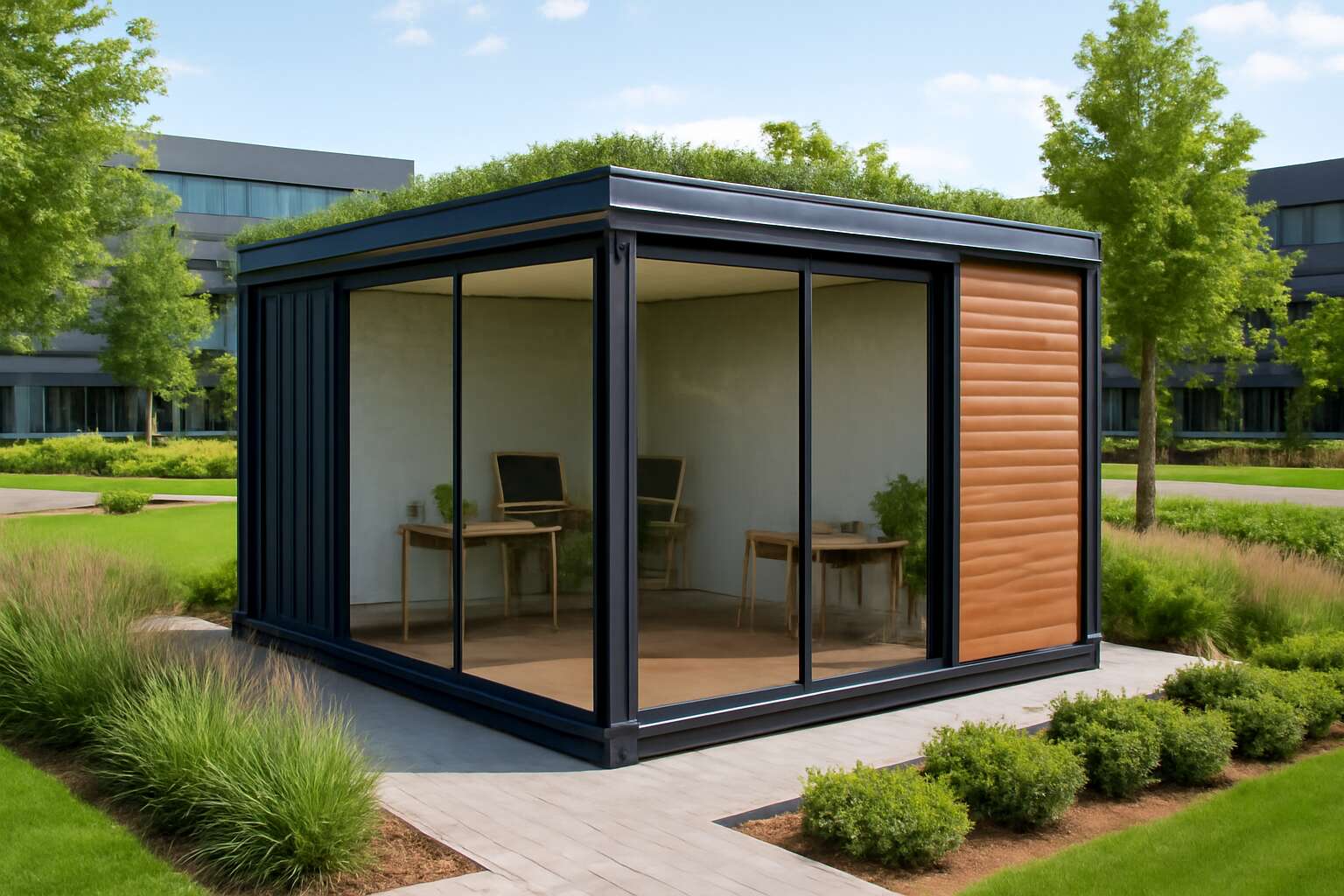
Container Office Transformation: A Practical Guide
Section to Optimize Space and Layout
Space has a price in South Africa, and modular workspaces pay it back fast. “Space should breathe,” a design lead says, and containers converted to offices make room for people, not corridors. The trick is to plan flow before you cut steel!
In a practical transformation, focus on layout first: keep collaboration zones near natural light, define quiet corners, and choose furniture that adapts as teams shift.
- Spatial rhythm along walls to maintain sightlines
- Modular partitions that accommodate shifting teams
- Flexible utilities designed for future expansion
For South African sites, consider insulation, climate, and security; exterior shells should handle heat while interiors stay calm. The result is a compact, humane office that travels with your business!
Section on Building Materials and Efficiency
“Build light, heat tight, and let the light do the talking”—a creed that makes containers converted to offices feel quick, quiet, and oddly humane. In practice, choosing building materials that breathe but defend against SA’s sun and security threats saves money before you even switch on the lights.
Insulation that blocks heat and damp, such as PIR foam or mineral wool, wrapped in a weather-resistant envelope. Exterior shells can be clad in durable corrugated steel, timber battens, or brick slips to soften heat gain. Interiors stay calm with air-tight membranes and low-VOC finishes; running a VRF system or efficient heat pumps becomes sensible and quiet.
- Insulation strategies that reduce cooling loads
- Exterior shell options for SA climates and security
- Smart electrical and water-efficient upgrades
Solar-ready roofs, energy-efficient glazing, and modular fittings keep the workflow nimble as the business grows. With careful material choices, this approach proves durable, economical, and surprisingly chic on the hot roads of South Africa.
Section on Compliance and Permits
Compliance is the quiet backbone of containers converted to offices. In South Africa, the journey from concept to occupancy hinges on approved plans that cover structure, fire safety, electrical standards, and zoning. Clear criteria shorten delays and future-proof the space.
Key compliance touchpoints include the following areas:
- Local planning and zoning approvals
- Fire safety and building regulations
- Electrical, water, and drainage standards
A solid permit narrative helps tenants and financiers alike, ensuring the office remains adaptable as growth arrives.
Section on Costs, ROI, and Vendor Selection
Speed is the new currency of growth, and in South Africa, containers converted to offices prove it with grace under pressure. This section unpacks costs, ROI, and vendor selection with a practical, human touch—no fluff, just clarity.
Costs vary with size, finish, and site conditions, yet rapid construction often trims downtime and finance charges. Look beyond sticker price to total cost of ownership, including transport, foundations, and energy performance.
- Upfront capex versus long-term operating costs
- Lifecycle savings from faster occupancy and reduced site disruption
- Vendor warranties and after-sales support
Vendor selection: align with partners who will stand by plans as they evolve. For containers converted to offices, evaluate track record, permits, and aftercare.
To guide vendor selection, ask these questions:
- What is included in the turnkey package?
- What certifications and warranties back the installation?
- Can the system scale with growth plans?



0 Comments