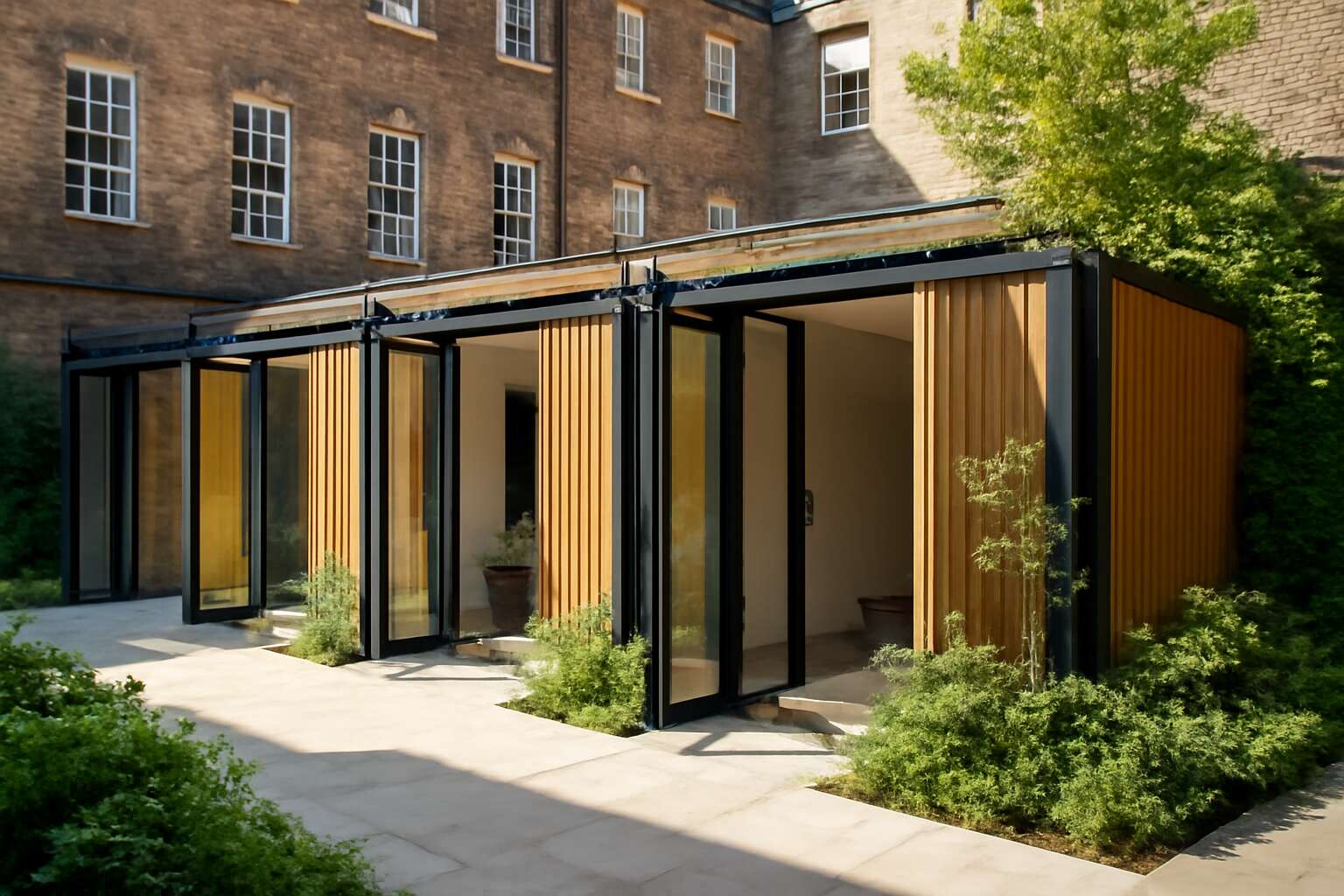
Overview of container conversions in London
London market trends for container conversions
Urban alchemy is happening on London’s streets: boxes that were once cargo now host cafes, offices, and pop-up shops. The market hums with appetite for speed, cost savings, and sustainable design.
Container conversions in London span sleek retail pods to compact offices, all built off-site for speed and quality. Market demand is shifting toward adaptable layouts, better insulation, and compliant, stylish finishes—now a baseline expectation for converted shipping containers london.
Key advantages include:
- Short lead times from order to install
- Modular design that scales for growth
- Lower upfront capex with quicker ROI
For a South African audience, these concepts translate well to compact urban sites.
The London scene rewards clever, compact architecture that laughs in the face of zoning drama and weather!
Cost ranges and budgeting for London projects
London’s container scene keeps surprising: converted shipping containers london are turning steel boxes into cafés, studios, and pop-up shops. Lead times shrink, budgets tighten, and urban edge meets off-site craft. Recent projects report up to 40% faster delivery—proof that speed and style can coexist, even on a compact site. For a South African site planning in hotter climates, insulation and cooling are non-negotiables.
Budgeting for London projects comes down to three axes: container price, conversion scope, and fit-out finishes. A used 20ft container can start around £2k–£4k, conversions £15k–£40k, and premium finishes push totals toward £40k–£100k per unit. Here are the main cost levers:
- Container procurement: £2k–£4k (used), more for new
- Conversion package: £15k–£40k
- Insulation and trades (electrics/plumbing): £5k–£15k
- Permissions, surveys, delivery: £2k–£6k
Regulatory landscape impacting container builds in London
London’s container conversions now deliver up to 40% faster than brick-and-mortar builds, a punchy testament to speed with style. The regulatory landscape in London shapes every project; planning permissions, building regulations, and fire safety are not add-ons but design partners: converted shipping containers london demonstrate how compliant, nimble urbanism can coexist with bold aesthetics.
- Planning permission and permitted development rights
- Building regulations and structural integrity
- Fire safety, electrical, and ventilation standards
For South African readers planning in hotter climates, insulation and cooling still matter, but London’s permits, surveys, and fire codes demand early coordination. The move toward clearance rewards early coordination with planners; alignment with British Standards and documented loads and access routes help keep the process brisk rather than bureaucratic.
Popular use cases in London: offices, cafes, retail
London’s built environment keeps bending toward nimble, high-impact spaces. In practice, converted shipping containers london sprout as quiet revolutions in the urban fabric; they arrive on site with a swagger—stout steel that becomes offices, cafes, or boutique spaces. Each conversion is a compact manifesto: bold aesthetics married to pragmatic detail, ready to adapt as neighborhoods evolve and daylight shifts across the day.
- Offices that maximise natural light and flexible layouts
- Cafes and eateries with compact service cores and social moments
- Retail pop-ups and micro-shops inviting exploration and linger
For South African readers, the core appeal resonates: smart, sustainable spaces delivered with speed, crafted to weather heat and bustle while keeping character intact. The London story shows that efficiency can feel human, not clinical.
Sustainability and efficiency benefits for London projects
London’s container conversions offer a tempo that cities crave: project timelines compressed, daylight coaxed into every corner, and a drama of steel turned into space. In the realm of converted shipping containers london, this is more than a boast—it’s a practical revolution that travels with you from planning to opening. Expect fast delivery, adaptable layouts, and a presence that feels human, not industrial.
- Reduced embodied carbon through reuse of steel and modules
- Efficient on-site assembly minimizing disruptions
- Strong insulation and daylight strategies for enduring comfort
For South African readers, this approach feels both practical and poetic—robust under heat, quick to open up to sun and breeze, and respectful of budgets that must stretch further. I’ve seen how these spaces bloom into neighborhood anchors, inviting linger and conversation.
Design and build options for container conversions in London
Off-site fabrication versus on-site assembly for London projects
Insulation, weatherproofing and climate control for the UK
Urban spaces in London are increasingly sculpted from modular realities, where design and build options for container conversions blend speed with durability. The idea of converted shipping containers london signals a serious shift: compact spaces that respect climate, code, and character in equal measure.
Design-build routes range from turnkey packages to modular off-site assemblies and hybrid retrofits. Each path prioritises clear accountability, predictable timelines and a coherent architectural language that travels from concept to occupancy.
- Turnkey design-build: single contract, integrated design, smooth handover.
- Modular off-site: factory-built modules joined on site for speed and precision.
- Hybrid retrofit: modular pods blended with traditional finishes for tight sites.
Insulation and climate control are the quiet backbone of UK resilience. Choose internal or external insulation, respect vapour management to curb condensation, and pair with controlled ventilation and underfloor heating or heat pumps for comfort across seasons.
Weatherproofing involves robust seals, external cladding, and corrosion protection for steel under damp UK skies. In parallel, climate control—MVHR, heat pumps, and discreet radiant heating—keeps interiors healthy without nagging energy bills.
Electrical, plumbing and HVAC considerations
London’s micro-spaces are growing fast. For converted shipping containers london, the design-build approach matters as much as the unit—integrated design, rapid siting, and a shell that stands up to the city’s damp climate.
For South African readers eyeing London projects, electrical work must be planned early. Conduits through steel, space for future tech, and UK-compliant wiring with compact lighting and data layouts are essential.
Plumbing and HVAC demand equal pragmatism. Thoughtful pipe routing, venting, frost protection for external runs, efficient heat sources, and balanced ventilation keep interiors healthy and comfortable.
Key utility considerations:
- Electrical and data strategy: circuits sized for peak loads, concealed routing, and UK standards
- Plumbing approach: compact pipework, venting, trap-free design, water-saving fixtures
- HVAC strategy: discreet MVHR or heat pumps, radiant options, and minimal noise
Interior layouts and space optimization for London sites
On London’s tight urban loom, converted shipping containers london can bloom into multi-level spaces, delivering up to 40% more usable space through mezzanines and clever circulation. The design-build approach treats the unit as a system, a modular organism tuned to a site’s breath and damp climate.
Interior layouts embrace fluidity and restraint: compact kitchens tucked into bays, sliding screens that morph from desk to lounge, and stairs that double as storage. For South African readers eyeing London projects, these layouts feel practical and future-ready. Space optimization becomes poetry—every inch accounted for, every surface primed for a second life.
- Flexible, non-load-bearing partitions that reconfigure with ease
- Integrated storage and service channels for clean lines
- Optimal daylight through slender glazing and smart orientation
In the city’s pulse, design-build unlocks room to breathe—where converted shipping containers london become not just shelters but stages for work and community.
Finishes and aesthetics: external and internal design trends in London
In London, finishes make the difference between a utilitarian box and a living room that speaks. The design-build approach treats the unit as a dialogue between exterior shell and interior warmth, where external treatments shield from damp climate while becoming street-character. The concept of converted shipping containers london can be tuned with external cladding to weather gracefully and still glow with quiet interior elegance.
From our bench, these choices resonate with clients who crave texture and light.
- External design options: weathered steel, timber cladding, brick slips, or living façades.
- Internal finishes: engineered timber floors, acoustic panels, soft plaster walls, and restrained millwork.
- Color and light: slender glazing strategies, tactile neutrals, and accent hues that age gracefully.
Harmonising materials with a rational build sequence keeps maintenance low while maximizing impact in tight urban sites.
Choosing a supplier and managing the project in London
How to vet container conversion companies in London
London thrives on clever space, and converted shipping containers london are rewriting the city’s rhythm. A headline from a recent portfolio: projects completed on time and on budget rose by 28% when clients sought transparent processes and clear milestones. “We build space that breathes,” says a London designer, and the result feels cinematic—steel meeting light.
Choosing a supplier and managing the project in London requires a blend of trust and rigor. Look for a portfolio that showcases diverse uses, evidence of local permitting know-how, and clear, contract-ready timelines.
- Transparent pricing with phased invoicing
- Local project management and timely communication
- Strong warranties and post-install support
From kickoff to handover, keep a steady cadence of milestones and on-site checks. A collaborative approach preserves design intent while adapting to site realities, making the journey feel as graceful as the final space.
Planning permissions and permits in London: what you need to know
London treats space as currency, and converted shipping containers london are turning vacant corners into usable rooms. “We build space that breathes,” a London designer notes, and the effect can feel cinematic—steel meeting light. Choosing a supplier and managing the project here requires a blend of trust and discipline, with transparent timelines and crystal-clear milestones setting the rhythm from day one.
- Use-class and change of use determine what permits, if any, are needed.
- Engage early with the local council; boroughs vary in their requirements and review timelines.
- Expect a design review window and a lead time that stretches beyond the initial build estimate.
Planning permissions in London demand patience and a clear narrative for planners. For South African clients, the same discipline applies—structure, transparency, and clear milestones travel across borders. A capable supplier shares upfront expectations and a realistic timeline, helping a converted shipping containers london project bend to site realities without losing its edge.
Project timelines, milestones and budgeting for London builds
London’s modular revolution is sweeping up 27% faster occupancy than traditional builds, turning vacant corners into usable rooms. Space is currency here, and converted shipping containers london sit at the heart of that hustle—steel meeting daylight with a wink.
Choosing a supplier for London projects means more than a quote; it’s about clarity and chemistry. From the outset, we want crystal-clear timelines, upfront milestones, and a realistic budget that travels well—quite possibly on a passport with few stamps left to exhaust.
- Concept design and client sign-off
- Fabrication schedule with staged quality checks
- Delivery logistics and site coordination
- Final commissioning and handover
For South African clients, that same discipline travels across borders—structured milestones, transparent updates, and a budget that anticipates FX and VAT quirks, keeping momentum without turning plans into pretzels.
Quality standards, warranties and supplier certifications
Choosing a supplier for London projects is about more than a quote—it’s about clarity, collaboration, and durable outcomes. In the realm of converted shipping containers london, you want a partner who aligns on sourcing, welding standards, corrosion protection, and long-term performance. A solid proposal spells lead times, quality checkpoints, and how warranties travel with the finished spaces.
Quality standards, warranties and supplier certifications sit at the core of the partnership. A concise agreement confirms certifications, warranty terms, and traceable material records, keeping you confident from the first steel cut to final handover.
- Quality management system certification (ISO 9001 or equivalent)
- Clear warranty terms with response times
- Supplier certifications and material traceability
- Independent inspections and testing records
Post-delivery support rounds out the service. In London, dependable post-project help, transparent updates, and flexible issue-resolution keeps momentum alive long after installation.
Contracting models: build-to-suit, turnkey, and maintenance packages
London’s space is premium, and a solid plan makes every metre count. A London project lead once said, “clarity now saves millions later.” For converted shipping containers london, choosing the right supplier is about more than price — it’s alignment on sourcing, welding standards, corrosion protection, and long-term performance from day one. The proposal should spell lead times, quality checkpoints, and how warranties travel with the finished spaces, keeping South African teams confident from steel cut to handover.
- Build-to-suit: tailored footprint and services
- Turnkey: single contract with a fast handover
- Maintenance packages: ongoing support and updates
Contracting models matter for management. Build-to-suit tailors the footprint to your site; turnkey delivers a plug-and-play space; maintenance packages extend care after installation. These options keep risk predictable and budgets clear for London projects—and they reassure South African investors eyeing London diversification.
Applications and case studies of container conversions in London
Container offices and coworking spaces in London
London’s flexible work culture reshapes space design, with container offices rising in city corners. Applications span compact offices and coworking hubs that adapt as teams grow and shift. The appeal is speed and comfort—converted shipping containers london deliver usable spaces in weeks!
- Shoreditch coworking lofts crafted from stacked containers offering hot desks, private pods, and meeting zones.
- Canary Wharf micro-offices in refurbished container blocks provide plug‑and‑play occupancy for startups.
- Greenwich Peninsula studio pods scale—from one container to a compact campus—keeping urban teams close.
From climate control to acoustics, these projects blend clarity with urban practicality, showing how converted shipping containers london can be more than a novelty—they become purposeful work environments in dense city fabric. The concept resonates with urban buyers seeking efficient spatial solutions in South Africa as well.
Pop-up shops, cafes and hospitality concepts in London
Residential container projects and living spaces in London
London’s micro-living boom has quietly reshaped the cityscape, with an 18% uptick in container-based homes over the past five years; converted shipping containers london stand in as stylish, space-smart residences, delivering daylight, thermal comfort, and a sense of scale that belies their footprint. They prove that small can be generous when design is fearless.
- Hackney garden studio: 8m container garden studio—bright, with sliding doors opening to the yard.
- Battersea: a compact two-storey pod with a mezzanine and skylights for airy living.
- Dalston: a snug basement-turned-suite with a compact kitchen and independent climate controls.
These projects show the London market where space is a canvas, not a constraint. For South African readers considering international design experiments, the lesson is universal: warmth, robust insulation, and a sense of personality that big-box housing rarely grants.
Industrial storage, logistics hubs and ancillary spaces in London
Across London’s industrial districts, converted shipping containers london are rewriting the playbook for storage and light logistics. They become secure racking rooms, chill zones, and mini distribution points tucked into courtyards, delivering rapid access, low footprint, and surprisingly humane working spaces.
- East London: a 40-foot module repurposed into a compact cold-storage unit for a regional food distributor.
- Barking Riverside: a palletized goods hub built from stacked containers with breezeblock loading bays and admin pods.
- Greenwich Peninsula: ancillary spaces including maintenance workshops and crew rooms for on-site teams.
These case studies illustrate how the city teams efficiency with character, turning demand for flexibility into tangible, scalable assets.
Community and public sector container projects in London
In London, converted shipping containers london are reshaping the civic landscape, turning overlooked courtyards into quick-to-activate spaces that serve communities with grace and grit. A city famed for its scale now houses nimble, humane infrastructure—pop-up libraries, community workshops, and mobile clinics that reach people where they are. The allure lies in resilience and adaptability, turning constraints into catalytic space.
- Community arts hubs in tight urban sites
- Mobile health and social care pods
- Junior education spaces and after-school drop-ins
These civic applications reveal how thoughtful design elevates utility into public generosity, letting cities breathe without bloating. Every project becomes a small, public triumph—bright, accessible, and unmistakably London. For South African cities facing tight urban footprints, these case studies offer transferable lessons.




0 Comments