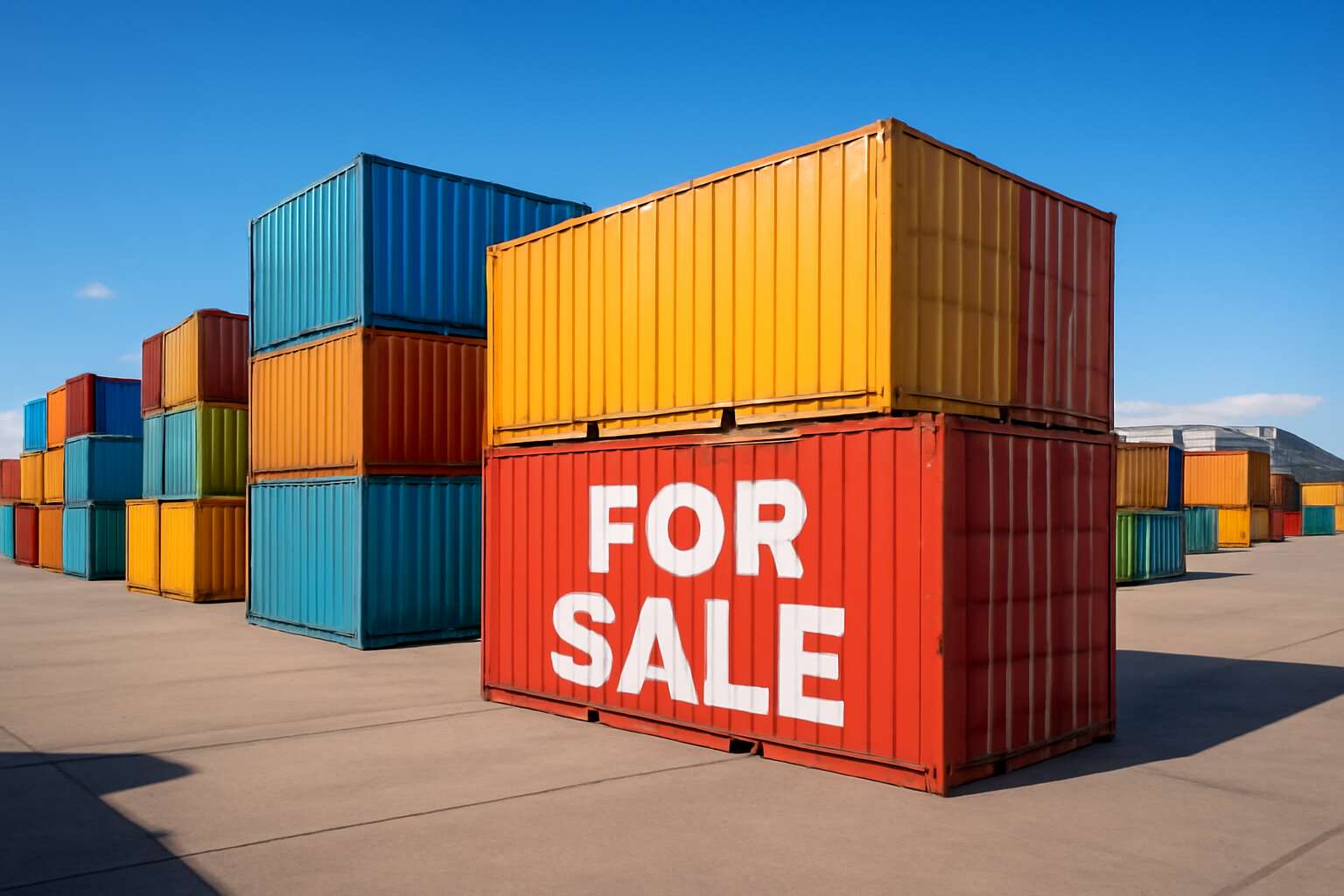
City Deep Container Market Overview
Overview of the City Deep container sales landscape
City Deep hums with the steady pulse of freight. In 2024, container activity in Johannesburg’s inland hub climbed roughly 8%, a sign that space is becoming more precious and portable than ever. “Flexibility is the new square footage,” a local logistics director notes, and I sense that sentiment linger as buyers weigh risk, reward, and the quiet courage it takes to invest in modular space.
In the City Deep container market overview, containers for sale city deep are prized for speed, durability, and modularity. Buyers seek units that withstand South Africa’s climate while accommodating shifting volumes, whether for warehousing, pop-up workshops, or disaster recovery buffers.
- Location advantages
- Condition and warranty
- Transport and compliance
That triad keeps City Deep a magnet for investors and operators who crave dependable space amid ongoing flux.
Local suppliers and distributors in City Deep
City Deep’s local suppliers and distributors form the backbone of the container market, turning demand into space with surprising alacrity. When a project calls for speed and durability, containers for sale city deep line up to meet the brief with on-site delivery, weatherproof shells, and modular footprints ready to scale from a tight warehouse to a pop-up workshop.
Key capabilities from these players include:
- On-site delivery and installation coordinated with rail and road links
- Customization options from insulation to ventilation and shelving
- Short lead times and transparent stock levels
- After-sales support and warranty locally interpreted for SA climate
In a market that prizes reliability as much as price, local distributors in City Deep navigate transport links and climate with a practical swagger, keeping space ready as volumes ebb and flow.
Current demand trends for containers in City Deep
City Deep’s container market hums with double-digit growth signals as developers race to deploy on-site modular spaces that can be commissioned in days, not weeks. The demand tempo points to containers for sale city deep becoming essential components in timelines across industrial, retail, and logistics projects.
Three forces are shaping this trend:
- On-site delivery synchronized with rail and road corridors
- Modular customization from insulation and ventilation to shelving and power
- Short lead times and transparent stock levels that keep projects predictable
Amid City Deep’s bustling yards, the story is less about volume and more about reliability—spaces that transition from a pop-up workshop to a compact storage unit without flinching at SA climate or heavy freight.
Key terms buyers should know in the City Deep market
City Deep’s market for containers for sale city deep defies the romance of volume with a patient insistence on reliability. In this corridor of rails and warehouses, buyers measure value not by pounds moved but by predictability—lead times, transparent stock, and resilience to SA’s climate. The vocabulary guiding decisions matters as much as the metal itself, distinguishing standard dry boxes from insulated variants built to endure heat and gusts with quiet tenacity.
Key terms buyers should know include:
- ISO container standards and common dimensions
- Dry cargo vs refrigerated (reefer) units
- High-cube variants and height considerations
- Payload, tare weight, and structural rating
- Insulation, ventilation, and fit-out options
- Stock levels, lead times, and transparency
- Delivery and logistics alignment with rail and road in City Deep
- Warranty, maintenance, and resale value
Container Types and Configurations for City Deep Buyers
Standard dry shipping containers: specs and common uses
City Deep’s storage landscape is changing fast, with one in three projects now using a container as a compact, move-ready space. The value isn’t just metal; it’s adaptability, reliability, and speed. These units deploy on-site with minimal fuss, letting sites run while traditional builds catch up.
Standard dry containers come in 20-foot and 40-foot lengths. A 20-foot unit offers roughly 33 cubic meters of interior space, tare around 2.2 tonnes, and external dimensions near 6.0m x 2.4m x 2.6m; the 40-foot doubles the floor area. For City Deep buyers, this is the starting point in containers for sale city deep.
- On-site storage
- Portable workshops
- Temporary offices
These configurations pair rugged durability with adaptable interiors, ready to withstand South Africa’s changing weather and busy sites.
High cube containers for extra storage capacity
City Deep’s workyards hum with new possibilities as high-cube containers rise taller than the usual box, gifting an extra headroom of space. In the city’s fast-paced market for containers for sale city deep, this height translates into practical magic: a single unit becomes storage, workshop, and office all at once, deployed on-site with a whisper of effort!
- Extra headroom and flexible interiors for taller equipment and stacked storage
- Insulated or ventilated shells to tackle South Africa’s shifting climate
- Office, lab, or workshop floorplans with partitions, electrical, and shelving
For City Deep buyers, high cube configurations are about reliability, speed, and adaptable interiors that ride the tides of project demands.
Refrigerated containers (reefer) for cold storage needs
City Deep’s cold-chain is changing fast: refrigerated cargo volumes have grown 40% in the past year, and reefers sit at the center of that shift. For buyers looking at containers for sale city deep, reliable temperature control is non-negotiable.
Refrigerated containers (reefer) provide precise climate management for perishable goods and sensitive pharmaceuticals. They combine insulated shells, robust compressors, and flexible interiors that can be configured on-site for South Africa’s shifting climate.
- Tight temperature control and quick recovery to set points
- Low-energy operation with advanced insulation
- On-board monitoring, data logging, and remote alarms
For City Deep buyers, reefers excel in on-site storage, pop-up labs, and mobile workshops—containers for sale city deep that power fast-moving projects.
Specialized containers: open-top, flat-rack, and ventilated options
City Deep’s logistics pulse is loud—and the right container type can quiet the noise. Open-top, flat-rack, and ventilated configurations stand at the center of on-site loading, mobile labs, and pop-up workshops across South Africa’s shifting climate.
Open-top containers excel when bulky cargo or long items need unfettered access, even when crane time is tight. Flat-rack frames shrug off side walls for heavy gear and palletized prints that won’t fit in a standard shell. Ventilated units keep air moving to curb moisture and spoilage in warm seasons.
- Open-top: roof removal for oversized cargo and quick crane access.
- Flat-rack: rigid, no-surprise loads and easy stacking for temporary setups.
- Ventilated: airflow to protect perishables and process lines in SA heat.
For buyers scouting containers for sale city deep, these configurations offer flexible deployment across storage yards, pop-up labs, and mobile workshops—delivering speed without sacrificing security.
Renovated and refurbished containers: value, warranties, and considerations
City Deep’s yard hums with renewed purpose when a refurbished unit slides into place. I’ve watched renovated containers offer value without sacrificing security, especially when open-top, flat-rack, and ventilated configurations are given a second life. For buyers scouting containers for sale city deep, these shells transform into mobile workshops, pop-up labs, or on-site storage with dependable performance and a touch of character!
Here are the essentials to weigh:
- Warranty coverage: structural integrity, doors and seals, and corrosion protection—typical terms on refurbished units range from 12 to 24 months.
- Value and lifecycle: lower upfront cost, extended service life with expert reconditioning, and quicker deployment.
- Considerations: certification, SA standards compliance, visible and hidden corrosion, and documented refurbishment records.
- Maintenance expectations: periodic repainting, rust prevention, vent checks, and door seal inspections.
In South Africa, containers for sale city deep line up as sturdy, adaptable shells for storage yards, mobile labs, and temporary workshops—ready to carry your next project with a quiet, reliable rhythm.
Buying Guide for City Deep Container Purchases
New versus used containers: advantages, drawbacks, and pricing
City Deep’s container market is more than metal—it’s a decision that can speed or stall a project. A seasoned buyer once whispered, “The container you choose writes the timeline.” New containers offer pristine structure, warranty, and customization, but command a higher price and longer lead times. Used containers slash costs and ship fast, yet may hide wear, corrosion, or hidden repairs. The coils seem to hum with a quiet, spectral expectancy.
- New: warranty, predictable specs, customization—drawbacks: price and lead time.
- Used: lower cost, immediate delivery—drawbacks: wear, shorter life, potential repairs.
Pricing varies with condition and age; City Deep buyers weigh the trade-off before choosing containers for sale city deep.
Sizing and capacity: selecting the right container for your project
A mis-sized container can derail a project faster than a midnight deadline. In City Deep, sizing and capacity are the quiet architects behind every build. For buyers scouring containers for sale city deep, the right box begins with a precise measurement of space, access, and future use.
- Footprint and length: choose 20 ft, 40 ft, or a custom option based on floor plan.
- Height: standard 8’6″ or high cube 9’6″ for extra interior headroom.
- Door openings and interior width: ensure equipment, pallets, and personnel can move with ease.
- Weight capacity and payload: match tare weight to your cargo and loading needs.
Pair measurements with site constraints, access windows, and lead times to avoid surprises as you move from cartography to concrete. In South Africa’s logistical heartbeat around City Deep, practical sizing keeps projects on a steady tempo. The result is space that breathes with your plan—ready when you are, and exactly sized for the task at hand.
Delivery, site prep, and installation in City Deep
Delivery is the hinge upon which City Deep projects swing between ambition and assembly. In this industrial heartbeat, a well-timed arrival can save days, not just dollars, and the line between on time and overtime is drawn in steel. For buyers exploring containers for sale city deep, the journey begins with precise space, permits, and a weather eye on the river winds.
I’ve found that the best outcomes come when suppliers lock a delivery window that matches the site cadence. On site, prep the ground—level, drain, anchor—and ensure cranes or forklifts have safe swing space. During installation, verify foundation plates, seal joints, and secure the container to resist movement and the South African breeze.
- Delivery considerations: access, clearance, and lead times
- Site prep considerations: leveling, drainage, and foundations
- Installation considerations: alignment, sealing, and secure anchoring
Quality checks and supplier due diligence
City Deep moves on a tide of steel and timing—68% of container projects report smoother timelines when supplier due diligence is done upfront. For buyers exploring containers for sale city deep, the journey begins with trust as much as specs.
Quality checks and supplier due diligence anchor the investment: material grade, corrosion protection, door seals, watertight integrity, the CSC plate, and warranty coverage. In South Africa, reputable partners align with third-party inspectors to ensure consistent performance across seasons.
- Material and corrosion protection certificates
- CSC plates and serial numbers verified
- Warranty scope and service network
- Lead times and delivery terms
- Refurbishment history and prior inspections
Choosing the right partner for containers for sale city deep translates into reliability, transparency, and value that travels from yard to project site.
Cost, Logistics, and Compliance for City Deep Projects
Pricing benchmarks and what affects container prices in City Deep
City Deep pricing runs on more than a price tag—freight swings, insurance, and duties can tilt the total by a quarter. For buyers scouting containers for sale city deep, the price tag is only the opening scene in a broader narrative. The right choice balances transit routes, storage needs, and compliance demands.
Cost influences to consider include the following:
- Base container price (new vs refurbished vs used)
- Inland transport to City Deep by road or rail
- Port handling, stacking, insurance, and contingencies
- Compliance fees, permits, inspections, and VAT
Logistics reality: lead times, schedule alignment with City Deep yard operations, potential congestion, and risk of delays shape cost and feasibility.
Compliance frame: SA safety standards, weight and dimension checks, and regulatory clearances influence final pricing and viability. Understanding these realities helps buyers navigate City Deep container projects with confidence.
Total landed cost: transport, taxes, permits, and modifications
Financing, leasing options, and payment terms
In City Deep’s bustling yards, every container purchase tests value and intent. Cost is more than the price tag—it includes delivery, insurance, and modifications, plus a financing plan that fits project cash flow. For containers for sale city deep, smart budgeting balances upfront outlay with long-term utility.
Logistics must align with site readiness, crane access, and permit lead times. A thoughtful approach to financing unlocks speed and flexibility. Leasing options include several paths:
- Finance lease with fixed repayments
- Operating lease with maintenance included
- Rent-to-own option at term end
Compliance covers permits, safety standards, VAT, and customs workflows that South Africa requires for importing containers. Clear records and supplier due diligence keep projects moving without surprises.
Payment terms should be transparent and pragmatic: upfront deposit, staged milestones, and flexible credit checks. With these in place, the purchase becomes a scalable component of City Deep projects.
Regulatory compliance, safety standards, and permits for container projects in City Deep
Cost is more than the sticker price. In City Deep, delivery, insurance, and on-site modifications all shape the bottom line. For containers for sale city deep, a financing plan that respects project cash flow brings speed and predictability to complex builds.
Logistics must align with site readiness, crane access, and permit lead times. A thoughtful approach unlocks speed and flexibility. Key logistics elements include:
- Site readiness and access for delivery
- Crane scheduling and rigging coordination
- Timely permit approvals and inspection slots
Compliance covers permits, safety standards, VAT, and customs workflows required for importing containers. Clear records and supplier due diligence keep projects moving without surprises.
- Permits and safety compliance checks
- VAT handling and customs documentation
- Documentation trails and warranty validation



0 Comments