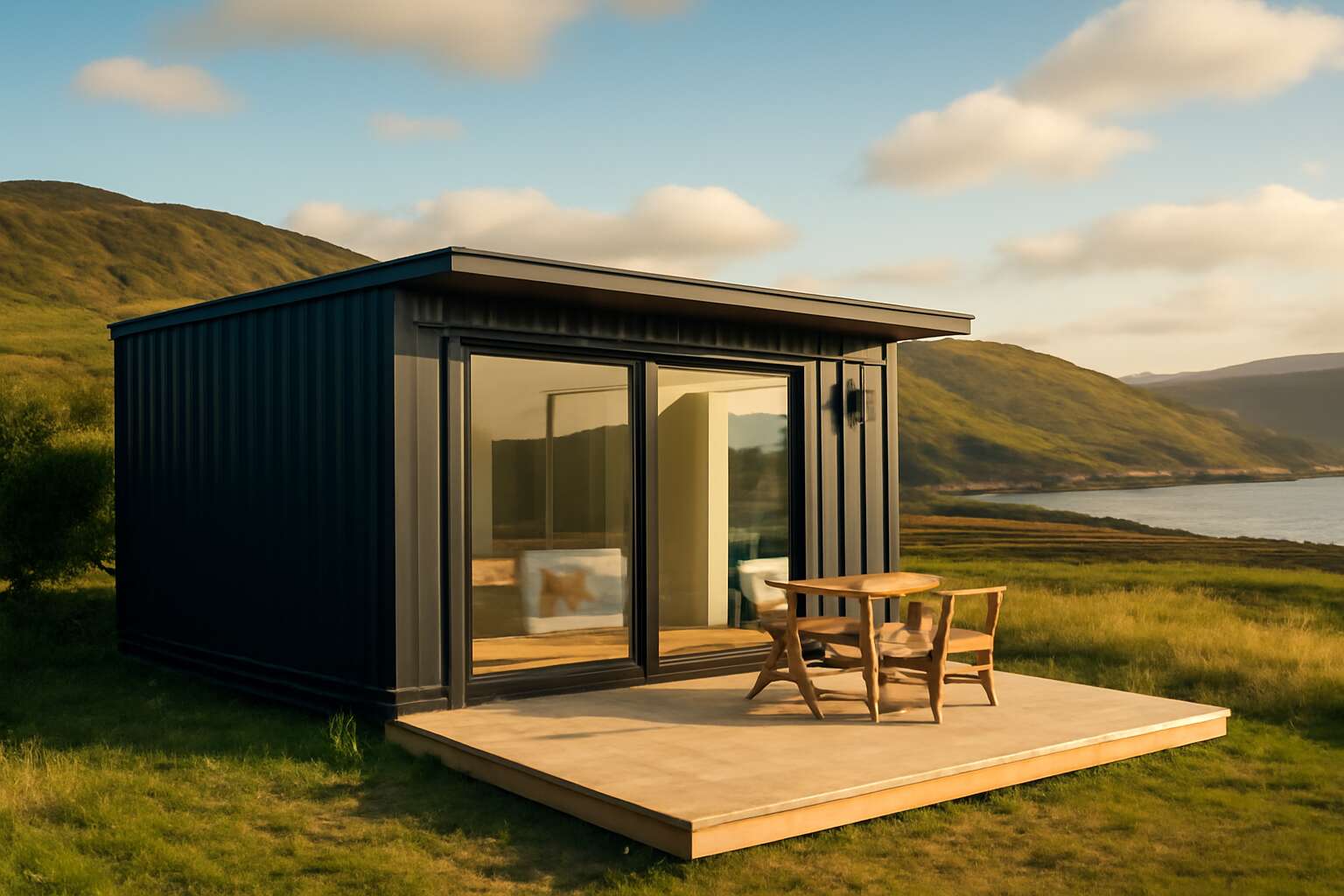
Understanding converted containers in Scotland
Choosing the right container size and layout
Across Scotland, a new vernacular is taking shape. A recent survey shows a 28% rise in projects using converted containers scotland for rural homes and studios, proof that utility can meet warmth. Steel walls soften with timber touches, while daylight spills in through generous glazing. It feels almost like a neighbor you can grow with.
Understanding converted containers in Scotland means sizing with intention. For tight footprints, a 6m unit can become a compact office or guest room; a 12m layout opens into a cosy two-bedroom home. Larger 15m configurations invite open-plan living. Common configurations include:
- 6m micro-office
- 12m family cabin
- 15m open-plan studio
Layout matters as much as size; for rural Scotland and South African readers, weather resilience, insulation, and door orientation are practical truths, not afterthoughts. A thoughtful mix of windows and flexible partitions turns steel into a lived-in space.
Planning and budgeting for container conversions
Scotland’s horizons teach resilience—steel and timber against wind and rain. A thread in the market is converted containers scotland, seen in rural homes and studios that blend utility with warmth. Planning begins with a question: what will endure through the seasons? A steel shell softened by timber and daylight feels less like prefab and more like a neighbour you grow with.
Budgeting such conversions hinges on more than a quoted price; it maps commitments across design, compliance, and care.
- materials and insulation choices
- planning permissions and building warrants
- labour, transport, and installation timing
These blocks ripple through budget, anchor expectations as the project moves from sketch to shell.
Across Scotland, regulation—planning and building warrants—shapes the timetable and terms of the build. Climate demands push insulation and airtightness to the foreground, while doors and glazing become efficiency tools and interfaces. A view of risk, finance, and procurement keeps the conversion durable.
Insulation energy efficiency and finishing options
In the hush between moor and sea, understanding converted containers scotland reveals heat as a guest you invite, not a trespasser. Insulation becomes weather-proof poetry, and finishing choices barter warmth with light.
Energy efficiency is a currency of care: airtight seals and continuous insulation. Opt for mineral wool or closed-cell systems, with timber or clad finishes that respect both structure and atmosphere.
- Timber-clad exteriors with a breathable barrier
- Low-E glazing to cut heat loss
- Insulated floors with discreet underfloor heating
Across Scotland and, for South African readers, the sentiment remains: these choices shape a space that endures beyond the weather’s whisper.
Regulatory considerations for container builds in Scotland
Regulatory considerations for container builds in Scotland aren’t the dull background; they are the hinge that keeps a bold concept from wobbling into red tape. A seasoned planner once quipped, ‘the frame is only as sturdy as the permissions it rests on.’ That mindset threads through every diagram, from siting to safety checks, and shapes what counts as a compliant conversion.
- Planning consent and site approvals
- Building Standards compliance and certification
- Fire safety and means of escape
- Energy performance and insulation requirements
- Foundations and site constraints
Across South Africa, the shared fascination with durable design meets similar governance, and yet the phrase converted containers scotland signals a respect for place, policy, and practicality that outlasts the weather.
Design options and construction methods for containers
Interior design approaches for living and working spaces
Design options for converted containers scotland balance form and function with a quiet architectural confidence. Structural methods—reinforced frames, heavy-duty corners, and modular connectors—enable spacious interiors and mixed-use zones without surrendering weather resilience. Designers increasingly embrace two-storey configurations, cantilevered decks, and fluid transitions that read as careful craft rather than a mere rebuild.
Interior design approaches for living and working spaces lean toward tactile contrast and generous scale. I mix timber cladding with glass partitions, low-profile joinery, and soft lighting to carve intimate zones within open plans. A mezzanine or loft frees floor space for a living enclave beneath, while built-in storage keeps circulation graceful. In my experience, converted containers scotland reward thoughtful texture and restraint.
Practical surface and material ideas that carry both warmth and durability include:
- Warm timber panels, brick-inspired cladding, and steel accents
- Resilient resin floors and engineered stone counters
- Acoustic-friendly textiles and matte finishes to soften reflections
Choice of materials and finishes
Material honesty turns a steel shell into a living space. In converted containers scotland, design choices move from utilitarian to expressive, where light and texture govern atmosphere. ‘Finish is a promise you can touch,’ a seasoned designer reminds us, and that promise shows in timber, stone, and glass layered against weathered steel. The result is space that feels crafted and confident, even for SA readers.
Construction leans on reinforced frames, heavy-duty corners, and modular connectors that create generous interiors and flexible zoning. Two-storey layouts and cantilevered decks push space upward while precise detailing keeps moisture at bay and appearances intentionally clean.
- Corten steel cladding with protective patina
- Lime-washed timber panels for warmth
- Engineered stone or quartz counters for durability
- Porcelain or resin floors with subtle texture
- Acoustic fabrics and matte finishes to soften reflections
Texture and restraint guide the journey, ensuring durability and grace across Scotland’s climate.
Delivery logistics site preparation and base work
“Finish is a promise you can touch,” a seasoned designer reminds us, and within converted containers scotland design options drift from industrial to intimate, where light, timber, and weathered steel compose a living form. Construction methods lean on reinforced frames, modular connectors, and clean geometry that rise with the site, crowned by cantilevered decks when the plan invites air and view. Clerestory light and layered textures invite warmth, while joints stay precise and weather-tight. The result is space that feels crafted and confident, ready to tell stories in every season. South African clients appreciate the resilience these spaces promise.
Delivery logistics and site preparation for converted containers scotland require calm choreography. From access routes to ground bearing, timing and weather windows shape moves. Base work anchors the stack, with foundations for soil and drainage. A concise sequence keeps the project humming.
Modular and scalable container projects in Scotland
Design options and construction methods for containers in Scotland lean toward poetry as engineering. In converted containers scotland, design options embrace modularity, letting a single footprint grow into a village of changing needs. Recent pilots report up to 40% faster on-site assembly, a testament to reinforced frames, modular connectors, and precise geometry that read as a crafted whole. “Crafted with care, not corner-cutting,” a design lead reminds us, as timber and weathered steel meet glass to soften industrial edges. Scalable layouts that stack cleanly rise with the site, crowned by cantilevered decks toward the sky.
Here are design vectors that keep projects nimble:
- Interlocking-frame systems preserve clear spans without bulk in converted containers scotland projects
- Weather-tight modular connectors enable rapid expansion
- Timber cladding (larch, cedar) softens the industrial look
Such decisions invite resilience and easy adaptation for South African developers facing varied climates.
Applications and case studies in Scotland
Residential cabins and homes from containers
In Scotland’s wild heart, a single 40-foot converted container can become a warm family cabin that endures wind and rain. converted containers scotland have moved beyond novelty, offering warmth, efficiency, and a touch of rugged charm to rural living.
These projects shine in real-life settings—from a cliff-top retreat on a Highland croft to a bayside guest cabin where children watch swans from a sunlit porch. For South African readers imagining climate-smart spaces, the lessons here—compact form, robust shells, and clever insulation—travel well. Case studies across the country reveal that thoughtful detailing creates spaces that feel part of the landscape, not an afterthought.
Typical applications include:
- Coastal retreats that weather salt wind and seasonal storms
- Rural family homes and guest suites on farms or crofts
- Compact home offices or studios that double as cosy living spaces
Each project speaks to ordinary life transformed—where shelter, light, and landscape mingle, and a simple box becomes a sanctuary against the wind.
Pop up shops and cafes
In Scotland, a compact converted container can become a bustling pop-up café that outlasts the weather and invites regulars to linger. ‘A container is a compact theatre for daylight and appetite,’ notes a Scottish café curator, and the line sticks. I’ve watched these units transform a wind lane into a place. converted containers scotland reshapes town edges and coastlines, proving mobility and character can coexist!
Applications span coastal bays and markets, with pop-up huts along cliff paths and seasonal cafés at harvests.
- Coastal pop-ups braving salt spray
- Rural farm-gate cafés for walkers
- Urban waterfront kiosks with espresso
Case studies across Scotland show how thoughtful detailing lets these spaces feel part of the landscape—bright interiors at dusk, sturdy shells against the wind, and flexible layouts that serve service and sociability. For South African readers, these lessons travel well, offering a template that is as resilient as it is inviting.
Office spaces and coworking containers
Scotland is quietly proving space can be portable and productive. Industry chatter suggests coworking pods built from converted containers scotland boost daylight use and cross-team collaboration in urban cores. “A container is a compact theatre for daylight and appetite,” notes a Scottish coworking curator.
Applications span coastal parks, urban tech hubs and rural enterprise pockets. Consider these setups:
- Coastal office suites with sea views
- Urban coworking hubs in redevelopment districts
- Rural enterprise pods for field teams
Case studies across Scotland show thoughtful detailing—bright interiors, sturdy shells, adaptable layouts—that help these spaces feel part of the landscape. For South African readers, these lessons travel well.
Storage and industrial solutions
In Scotland, space travels well and storage prosper. “A container is a compact theatre for daylight and appetite,” notes a Scottish coworking curator, capturing the charm of converted containers scotland. These portable modules are reshaping how organisations store, stage, and scale operations, from busy docks to quiet rural pockets.
Across Scotland, case studies reveal bright interiors, sturdy shells, and adaptable layouts that blend with their surroundings. For readers in South Africa, these models translate well to climates and logistics needs. Here are three standout applications:
- Coastal depots optimized for daylight and weather resilience
- Urban micro-warehouses tucked into redevelopment zones
- Rural field hubs supporting remote teams with secure, weatherproof storage
Event venues and temporary structures
Across Scotland, short-term venues surged by 42% last year, turning harbours and high streets into flash stages. I’ve seen daylight bounce off a steel frame, and crowds move with the wind through a theatre of opportunity.
In practice, converted containers scotland are used as portable event spaces that assemble quickly, weather the fickle Scottish climate, and scale up or down with a click. Coastal festivals, urban pop-ups, and rural gatherings show interiors tuned for sound, sightlines, and safe egress, blending practicality with theatre.
- Coastal pavilions that maximise daylight and shield audiences from spray.
- Urban micro-venues tucked into redevelopment corridors, with modular stages and seating.
- Rural field hubs hosting community performances, with weatherproof storage and secure power.
These case studies hint at a versatile model for readers in South Africa: robust, transportable shells that adapt to light, weather, and purpose, turning simple boxes into lasting experiences.
Costs ROI and long term maintenance
Cost factors and budgeting strategies
converted containers scotland show real ROI when budgeting stays disciplined. Energy costs can drop by as much as 30% over five years with smart design and durable finishes. A tight upfront plan translates into predictable running costs and faster payback, even in Scotland’s variable climate.
Long-term maintenance factors hinge on insulation performance, core structure, and utility systems. Maintenance cost drivers include roof integrity, corrosion protection in corrosive environments, HVAC needs, and components with limited lifespans. Budgeting strategies focus on lifecycle costs rather than sticker price alone, balancing initial spend against expected savings in energy, waste, and downtime.
Budgeting considerations at a glance:
- Upfront capex vs lifecycle costs
- Maintenance cycles and replacement parts
- Insurance, warranties, and regulatory compliance
In Scotland and for SA readers, modular, scalable approaches can reduce disruption and future-proof the investment while keeping long-term maintenance predictable.
Financing options for container projects
In a market where energy costs bite, converted containers scotland deliver tangible ROI when budgeting stays disciplined. A tight upfront plan yields predictable running costs and a faster payback, even under Scotland’s capricious climate.
Long-term maintenance hinges on insulation performance, core structure, and utility systems. Maintenance cost drivers include roof integrity, protective coatings, HVAC needs, and parts with finite lifespans. Keeping lifecycle costs in mind guides prudent decisions beyond sticker price.
Financing options for container projects offer flexibility:
- Traditional project finance from banks and lenders tied to lifecycle savings
- Lease-to-own and supplier financing that aligns payments with occupancy income
- Green financing and incentives for modular, sustainable builds
Maintenance warranties and lifecycle considerations
In a market where energy costs bite, converted containers scotland can deliver tangible ROI when budgets stay disciplined. A tight upfront plan yields predictable running costs and a faster payback, even in Scotland’s capricious climate, and that discipline travels well to South Africa’s energy-conscious developments.
Long-term maintenance hinges on insulation performance, core structure, and utility systems. Maintenance cost drivers include roof integrity, protective coatings, HVAC needs, and parts with finite lifespans—factors that influence lifecycle costs far beyond the sticker price.
- Comprehensive structural warranty (10–20 years) with scheduled inspections
- Coating and corrosion protection covers high-wear surfaces
- HVAC and utility-system service plans aligned with occupancy cycles
- Lifecycle refurbishment windows and end-of-life disposal or repurposing options
With these in mind, choosing providers who offer warranties and clear lifecycle roadmaps helps South African projects emulate resilience while aligning with local regulations and costs.
Sustainability and resale value
In energy-conscious markets, ROI hinges on disciplined budgeting and predictable running costs. For converted containers scotland, a tight upfront plan yields faster payback as modular design spreads capital across multiple life cycles. Even Scotland’s capricious climate tests resilience, yet the same approach translates smoothly to South Africa’s energy-aware developments, where steady operating costs and phased upgrades preserve value over time.
- Durable shells and high-quality coatings reduce replacement cycles
- Modular interiors enable staged refurbishments without major downtime
- Efficient HVAC and utility planning align with occupancy patterns
Sustainability and resale value rise when a project documents lifecycle performance, offers refurbishment windows, and maps end-of-life options. A space designed to be repurposed travels well in any market, turning asset longevity into a compelling selling point for buyers and lenders alike.



0 Comments