Wardens Cartage is a Trucking company establishment in Durban, KwaZulu-Natal, South Africa
Wardens Cartage: Specialist liquid bulk and chemical hauling across Southern Africa
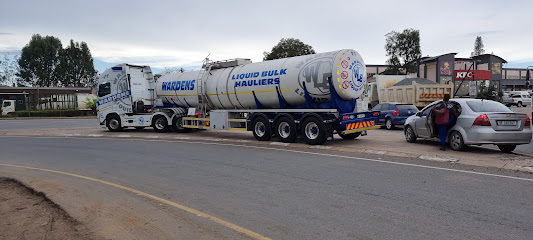
Wardens Cartage operates as a long-standing road transport specialist based in Durban, with a focus on liquid bulk products and both hazardous and non-hazardous chemicals. Established in 1977, the company presents itself as a mature, experience-driven player in the chemical hauling and tanker transport sector, emphasising safety, reliability and reach across South Africa and the wider SADC region. The business profile highlights a multi-decade footprint in liquid bulk transportation, including break bulk movements and a broad fleet capability designed to handle varied payloads and product types.
The core services offered encompass chemical transportation and tanker haulage, liquid bulk transportation, and associated fleet transportation. The service list explicitly includes handling for oils and fuels, acidic materials, bitumen, solvents, food-grade products, alcohols, white oils, and general packed cargo. This breadth positions Wardens Cartage as a versatile partner for customers requiring specialised road transport for both bulk and packaged product streams. The emphasis on hazardous and non-hazardous liquids indicates a range of safety and regulatory considerations central to the company’s operations.
Operational capacity is described in terms of payload options (14, 24, 28 and 34-ton loads), with depots strategically located to facilitate efficient access to national highways, load ports and suppliers. The company’s network includes depots in Durban, Cape Town and Johannesburg, framing a nationwide footprint that supports nationwide and cross-border logistics. The Durban head office and the regional depots are positioned to support quick loading from multiple gantry points, reinforcing a logistics model oriented towards reliability and rapid response for bulk liquid and chemical movements.
Wardens Cartage maintains a cross-border remit within the Southern African Development Community (SADC) region. The company lists several international destinations such as Walvis Bay (Namibia), Kolwezi (DRC), Ndola (Zambia), Karonga (Malawi), Blantyre (Malawi), Harare (Zimbabwe), and Mozambique destinations among others. This indicates a deliberate strategy to serve both domestic and cross-border markets, managing the complexities of international chemical and liquid bulk transport, including compliance and safety requirements associated with long-haul and cross-border operations.
Customer experience appears to be shaped by a professional, established operation, with a 24-hour emergency line highlighted for each major base. Email contact and phone lines are provided for Durban, Cape Town and Johannesburg locations, enabling customers to reach the relevant depot or head office with ease. The company’s articulation of a Level Three B-BBEE contributor status also signals a commitment to transformation and broader socio-economic objectives within the South African market.
In terms of practical job types, Wardens Cartage markets itself as capable of handling liquid bulk and chemical loads across multiple sectors, including fuels (diesel, petrol, Avgas and JET A1), food-grade products, acids, solvents, and bitumen. The inclusion of break bulk services alongside full tanker transport broadens the range of potential assignments, from bulk liquid shipments to packaged cargo and speciality chemical movements. The service narrative also alludes to loading flexibility across different gantries and sites, which can streamline operations for customers with multiple loading points or diverse supply chains.
How requests typically work
- Engagement usually begins via the Durban, Cape Town or Johannesburg depots or head office, using standard contact channels listed on the site.
- Payload choice is aligned with the project requirements, selecting from 14, 24, 28 or 34-ton capacities as appropriate for the cargo and route.
- Operations leverage depots near load ports and major highways to optimise loading, routing and delivery timelines, including cross-border legs within Africa.
- Emergency support is available 24 hours a day, providing a route for incident management and urgent responses should transport conditions require immediate attention.
Practical tips for customers
- Clarify whether the shipment is hazardous or non-hazardous and confirm the tier of regulatory compliance required for the product class.
- Discuss payload size (14, 24, 28 or 34 tonnes) and confirm the compatible vehicle configuration for the specific route and product type.
- Plan cross-border movements carefully, ensuring all necessary documentation and permits are in place for SADC destinations.
- Utilise the 24-hour emergency line for any transport incidents or urgent support needs, and keep depot contact details handy for seamless liaising.
- Consider loading flexibility across gantries to optimise schedule and reduce unloading delays at the destination.
Hours, locations and regional reach
Wardens Cartage maintains dedicated bases in Durban, Cape Town and Johannesburg, with a Durban head office and 24-hour emergency lines supporting operations at each site. The footprint extends throughout South Africa and across select African nations, underlining a practical infrastructure designed for nationwide and regional logistics. The company is well positioned to serve clients requiring consistent tanker transport, liquid bulk, and chemical hauling services across varied geographies.
Durban
KwaZulu-Natal
South Africa
Sorry, no records were found. Please adjust your search criteria and try again.
Sorry, unable to load the Maps API.
Trucking Services in Durban, KwaZulu-Natal
Durban, a major port city on the eastern coast of South Africa, acts as a key hub for freight movement and regional distribution. Local trucking companies provide a range of services designed to move goods efficiently between manufacturers, warehouses, retail outlets, and port facilities. In this setting, the emphasis tends to be on reliability, timely delivery, and careful handling of cargo in a busy urban and coastal corridor.
Typical service lines cover domestic freight movements within KwaZulu-Natal and broader routes across South Africa. Operators often offer both full truckload (FTL) and less-than-truckload (LTL) solutions, allowing customers to optimise costs depending on shipment size and urgency. For businesses that require stable transit times, some carriers provide destination-led scheduling, with fixed pick-up windows and guaranteed delivery timeframes. In the port-adjacent context, access to containerised freight, customs clearance assistance, and yard handling may factor into the service mix, although the depth of these offerings varies by company and contract.
Another common strand involves temperature-controlled transport. Durban’s coastal climate, coupled with perishable or sensitive goods, makes refrigerated vehicles and insulated trailers a practical inclusion. For industries such as food and beverages, pharmaceuticals, and certain chemicals, maintaining appropriate temperatures during transit is a critical consideration. Vehicles equipped with monitoring equipment help track temperature and provide visibility to clients while cargo progresses along its route.
Vehicle types reflect the diversity of demand in KwaZulu-Natal. Box trucks and curtainsider lorries handle general freight and palletised goods, while flatbeds suit bulky or over-dimensional items. Curtain-siders, rigid trucks, and semi-trailers populate the fleets commonly seen on regional corridors. In urban centres, last-mile capabilities may be offered through partnerships with courier or distribution networks, enabling door-to-door service for retail and e-commerce shipments.
Operational practices in Durban typically prioritise compliance with weight limits, road regulations, and driver hours. Efficient routes often incorporate coastal and inland corridors, taking into account peak traffic periods, weather conditions, and port operations. Customers can expect standard documentation such as waybills, delivery notes, and proof of receipt, with some operators providing digital tracking updates. Visibility and communication during transit are valued features for many clients seeking to manage inventory and plan replenishment cycles.
Relevant considerations for clients engaging trucking services in Durban include cargo insurance, secure loading practices, and the choice between dedicated fleet arrangements versus flexible courier options. Transit times are influenced by distance, road conditions, and the level of service chosen; it is common for businesses to specify service levels (economy, standard, or expedited) to align expectations with costs. Storage and warehousing are sometimes available in conjunction with transport services, offering staged handling for multi-location distribution.
Several practical steps underpin successful collaborations with trucking providers in KwaZulu-Natal. Clear shipment details—origin, destination, dimensions, weight, and any hazardous or temperature-controlled requirements—enable accurate quotations and route planning. Compliance with South African regulations, including licensing and vehicle standards, contributes to smoother operations and reduces the likelihood of delays. When evaluating options, clients often consider fleet reliability, customer support responsiveness, and the availability of real-time tracking or administration portals to reconcile invoices and delivery confirmations.
Overall, trucking companies in Durban aim to deliver a practical, scalable solution for businesses seeking dependable freight movement across the region. With a proximity to the port, a network of inland routes, and a focus on adaptable transport solutions, the sector supports a broad spectrum of goods, from consumer products to industrial materials, while navigating the logistical realities of coastal South Africa.
- Full truckload (FTL) services
- Less-than-truckload (LTL) and consolidation
- Temperature-controlled and refrigerated transport
- Flatbed and curtain-sider options
- Urban last-mile and regional distribution