Connect Logistics (Pty) Limited is a Import export company establishment in Durban, KwaZulu-Natal, South Africa
Connect Logistics (Pty) Limited — Integrated Logistics Solutions in Durban
Connect Logistics (Pty) Limited operates as a forward-thinking supply chain services company focused on delivering bespoke, end-to-end logistics solutions. Based in Durban, KwaZulu-Natal, South Africa, the organisation positions itself as a partner rather than a conventional carrier, emphasising long-term relationships built on trust, service, and execution. The business presents itself as outcome-based and client‑centric, aiming to simplify complex supply chains while increasing robustness and efficiency for high-volume operations.
The company articulates its capabilities around three main pillars of logistics and a value-add proposition. Its offerings are designed to be flexible and scalable, with an emphasis on meeting customer requirements with leaner, more agile processes. This approach is reflected in its stated focus on adaptability and continuous improvement over time, as illustrated by leadership messaging that highlights over two decades of industry experience and ongoing business model refinement.
Main services offered
- <strong Road Logistics – National and cross-border road transport with an expanding distribution network. The firm highlights the ability to manage high-frequency, time-sensitive cargo, including specialised transport strategies for certain freight types.
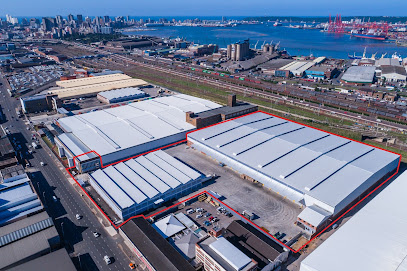
- <strong Contract Logistics – National warehousing with a focus on industry-specific storage and handling. The facilities are described as food grade, with compliance aligned to standards such as State Vet, PPECB, and PHO/Container Depot, and a substantial footprint of around 30,000 square metres. This offering supports high-volume FMCG and retail sector flows from raw materials to packaged goods.
- <strong Maritime Solutions – Aimed at bulk, breakbulk, container, and project cargo, with services designed to move assets to and from global locations. The team emphasises cost and risk management alongside compliant practices across containerised, bulk, and break-bulk modalities.
- <strong Value-Adds – Enhanced capabilities and services intended to complement core transport and warehousing activities. The specifics are framed as part of an integrated logistics approach to deliver broader value to customers.
Typical job types and industries
The company presents itself as capable of handling high-volume logistics needs across South Africa and neighbouring countries, with a focus on FMCG and retail sectors. Its integrated model supports continuous high-volume flows from suppliers to consumers, reflecting experience in handling fast-moving consumer goods and related supply chain dynamics. The client base is described in aspirational terms as “happy clients,” highlighting a service ethos centred on reliability, accountability, and responsive execution.
How requests typically work
Connect Logistics describes a client‑centric process that begins with understanding specific customer requirements, followed by designing tailored, end‑to‑end solutions. The emphasis is on accountability and first-time-right delivery, with a commitment to leaner, agile operations. Ongoing collaboration and relationship-building appear central to service delivery, with the aim of both simplifying the supply chain and increasing reliability for end users of high-volume logistics.
Accreditations and governance
The business notes its compliance framework through industry recognitions and memberships, including food safety and veterinary standards relevant to warehousing and transport. In particular, the food-grade warehousing capability is reinforced by references to State Vet, PPECB, and PHO/Container Depot compliance, underscoring a governance structure designed to meet sector-specific regulatory requirements.
Customer experience and reviews
Visitor feedback highlights a workforce-oriented culture and a focus on safety and skills development for employees. Several reviews commend prompt, efficient service and friendly staff, with drivers and operations repeatedly cited for professionalism. There are mentions of rapid loading and good communications, alongside responses from management addressing concerns raised in reviews, indicating an active approach to customer and partner engagement.
Practical tips for customers
- Clarify model expectations early: discuss the required service levels, frequencies, and cross-border movements to align on operational timelines and costs.
- Confirm warehousing needs: specify product types, handling requirements (including food-grade specifications), and any compliance matters to ensure appropriate storage and risk controls.
- Prepare for peak periods: leverage the scalable nature of the network by planning capacity in advance for FMCG campaigns or seasonal spikes.
- Engage in transparent scheduling: set milestones and performance indicators that track on-time delivery, accuracy, and safety standards.
- Assess geographical scope: utilise the nationwide and regional reach to optimise route-to-market strategies across South Africa and neighbouring countries.
Practical information for locating and planning a visit
Durban, KwaZulu-Natal serves as the core location for Connect Logistics, with operations described as national in scope and extended to cross-border services. The organisation presents itself as a partner capable of supporting a broad range of distribution needs within South Africa and beyond.
Durban
KwaZulu-Natal
South Africa
Sorry, no records were found. Please adjust your search criteria and try again.
Sorry, unable to load the Maps API.
Import-Export Services in Durban: Practical Insight for South Africa’s KwaZulu-Natal Hub
Durban, situated on the eastern seaboard of South Africa in KwaZulu-Natal, is a recognised gateway for import and export activity. An independent overview highlights how specialised firms in this port city typically support international trade through a combination of logistics, compliance, and client support. The focus remains on enabling smooth movement of goods from suppliers to customers, while managing country-specific requirements and regional logistics challenges.
Typically, import-export companies in Durban offer a range of services designed to streamline cross‑border trade. Core activities include freight forwarding, whereby the firm coordinates the transfer of goods from origin to destination, choosing appropriate modes of transport and managing bookings, routing, and scheduling. The role often extends to consolidation of shipments, which can help buyers and sellers optimise freight costs when smaller consignments travel together with other clients’ cargo.
Customs clearance forms a critical element of Durban operations. Specialist teams interpret and apply South African import and export regulations, prepare necessary documentation, and liaise with authorities to secure clearance. This covers compliance with customs codes, valuation rules, origin documentation, and any permits or quotas relevant to specific products. A thorough understanding of incoterms is typically provided to clarify responsibility for costs and risks at each stage of the journey.
Procurement and supplier sourcing are common features for firms serving Durban’s diverse industrial base. Companies may assist clients with identifying reputable suppliers, evaluating quality controls, and organising samples or audits before orders are placed. This service supports risk management by reducing the likelihood of supply disruptions and facilitating smoother manufacturing or distribution cycles.
Warehousing and distribution are frequently bundled with import-export offerings. Depending on requirements, storage facilities near the port or in regional hubs can accommodate inventory, value-added services, and order fulfilment. Efficient handling at Durban’s port, together with linked domestic distribution networks, helps organisations meet delivery windows and customer expectations in South Africa and neighbouring markets.
Insurance and risk management form a prudent part of the service mix. Coverage options commonly address transit risk, cargo damage, and third-party liabilities. While exact policy terms vary, visibility into coverage levels and claim processes is typically provided to ensure that risk exposure is understood and managed throughout the supply chain.
Practical considerations for those engaging Durban-based import-export services include understanding port operations and transit times, which can be influenced by weather, vessel schedules, and regulatory checks. The Durban area is well served by road and rail connections to inland markets, yet peak seasons may affect movement and tempo. Clients are usually advised on regulatory compliance, including documentation accuracy, product classifications, and any country-specific restrictions relevant to the goods involved.
In terms of the customer experience, Durban-based providers emphasise clear communication, transparent pricing structures, and proactive problem-solving. Organisations typically expect accompanying guidance on documentation workflows, timelines, and potential delays, helping buyers and sellers plan more effectively. While platforms and software may support document handling and shipment tracking, the fundamental workflow remains anchored in coordination, compliance, and dependable liaison with port authorities, carriers, and customers.
For businesses operating in KwaZulu-Natal or engaging with regional markets, Durban’s import-export services offer a practical blend of logistics execution, regulatory navigation, and supply chain support. The aim is to enable efficient trade flow while safeguarding compliance, accuracy, and reliability across the cross-border journey.