Understanding Commercial Restaurant Containers
What counts as professional restaurant containers
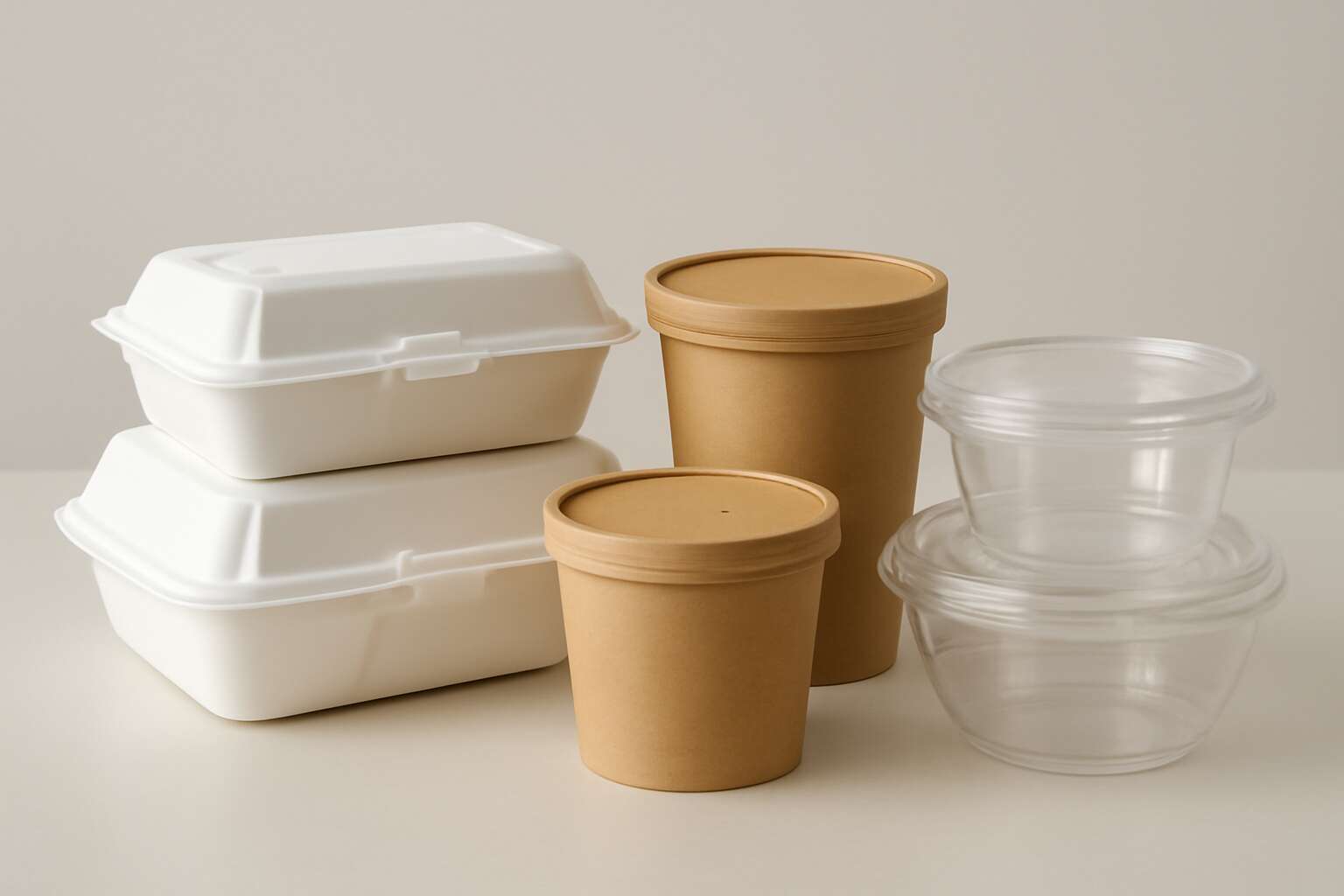
In South Africa’s bustling dining scene, the package you hand to a customer can outshine the dish itself. A recent survey found that 68% of diners say packaging influences where they choose to eat and whether they’ll return. Understanding commercial restaurant containers isn’t just about keeping food warm or safe; it’s about reliable performance from kitchen to curbside, with a design that feels inevitable—like a whisper of efficiency guiding every move.
Here’s what to prioritize when evaluating restaurant containers for sale:
- Food-safe materials that tolerate hot and cold extremes
- Stackability and tight seals to save space and curb leakage
- Durable lids and hinges designed for daily handling
- Compliance with local standards and easy cleaning
In practice, the right choice reduces waste, preserves flavour, and speeds service, with packaging that feels right for your brand. In the South African market, local support and solid warranties matter as much as price.
Common materials used in restaurant containers
Sixty-eight percent of diners say packaging sways where they eat and whether they’ll return, a statistic that hums with truth in South Africa’s bustling streets. Understanding common materials for restaurant containers is not mere minutiae but a compass—guiding heat tolerance, safety, and the rhythm of service. The right choice feels inevitable, like a whisper of efficiency that travels from kitchen to curbside and back into the dining room. For buyers in SA, the quest for restaurant containers for sale is really a search for harmony between function and form.
Common materials include a spectrum of thermoplastics and board:
- Polypropylene (PP) — heat-tolerant, lightweight, and dishwasher-safe
- PET or PETG — clear, rigid, and food-safe for sauces
- Polystyrene (PS) — economical, with good insulation
- Aluminum and stainless steel — durable lids and long service life
- Coated paperboard — fibre-based, recyclable in many markets
Sizes, shapes, and stackability for efficient service
Across SA’s busiest eateries, 68% of diners say packaging size and form shape their experience. “A container that travels with the order is a quiet efficiency engine,” observes a veteran SA kitchen manager.
For restaurant containers for sale, choosing the right sizes and shapes matters as much as the recipes, guiding how orders travel from kitchen to curb and back into the dining room.
- Footprint and lid compatibility
- Stackability and nestability
- Leak resistance and venting
Durability and recyclability steer every choice, shaping a service rhythm that keeps tables turning. In South Africa, buyers who hunt for restaurant containers for sale understand that the trio—size, form, and stackability—can be as transformative as the menu itself.
Bulk buying: pricing, MOQ, and vendor options
In SA’s busy kitchens, bulk buys are the quiet backbone of service. A procurement director once noted, “Size savings travel as lightly as a lid.” The discipline of planning freight, storage, and rotation matters as much as the menu.
When evaluating restaurant containers for sale, the equation isn’t simple—pricing, MOQs, and vendor options shape every decision. The right supplier offers transparent tiered pricing, realistic lead times, and samples that test fit with your service rhythm.
- Local distributors with South African warehousing
- Regional manufacturers offering custom sizes
- Global importers balancing cost with reliable after-sales support
Choosing wisely preserves table turnover and keeps costs predictable, even as the shelves fill with durable, recyclable solutions that travel from kitchen to curb and back again.
Safety and regulatory basics for food-contact packaging
In South Africa’s busy kitchens, packaging safety is a quiet driver of service. When you source restaurant containers for sale, safety and regulatory basics define value as much as price does. ‘Safe packaging is service reliability,’ a veteran procurement director notes, and it’s true—leaks, contamination, and mislabeling hit the line faster than a hot plate.
- Food-grade materials with certification
- Clear allergen and handling labels
- Tests for heat, cold, and leak resistance
- Traceability: batch codes and supplier declarations
Prioritise certified materials, clear labeling, and traceability—these basics keep food-safe packaging moving from kitchen to curb and back again.
Materials and Sustainability of Commercial Containers
Plastic container options: performance and safety
Packaging should move as fast as your service. If a lid won’t seal or a clamshell cracks mid‑rush, orders stall and reputations suffer. In South Africa, choosing the right restaurant containers for sale means balancing performance with safety—and protecting your brand with every takeaway.
Plastic options deliver two faces: performance and peace of mind. PP is tough, microwave-safe, and light; PET looks clear and resists leaks; PLA offers compostable paths for greener menus. All should be BPA-free or certified for food contact, and meet local and international safety standards so your kitchen stays compliant and confident.
Plastic options at a glance:
- PP: heat tolerance, durability, good for hot meals
- PET: clarity and strong seal for sauces
- PLA or recycled-content options: greener choices when disposables are inevitable
Sustainability sits at the core of modern service, guiding every choice from materials to waste streams.
Glass and ceramic containers for durability and heat retention
Durability is the engine of service. In kitchens where rush and heat collide, glass and ceramic containers deliver the edge. Glass and ceramic containers for durability and heat retention keep sauces calm and meals warm from pass-to-table. For restaurant containers for sale, choosing the right materials means balancing life with liability—and protecting your brand with every customer encounter. We weigh performance and safety so every order stays on track. As one chef says, ‘Durability is reliability in disguise.’
- Glass: durability and heat retention
- Ceramic: even heat distribution and reusability
- Reusability and lifecycle: longer service life reduces waste
In South Africa, glass and ceramic support reuse and longer lifecycles, helping reduce waste streams and align with local recycling programs. They endure daily rushes and coffee rings alike, a quiet backbone for brands that value reliability as much as style.
Stainless steel and other metal options
Stainless steel stands as the steadfast sentinel in bustling kitchens, soaking heat and beating back chaos. For restaurant containers for sale, this metal delivers a lifecycle that mirrors a brand’s reliability—rigid enough for sturdy stacking, gentle enough to keep sauces calm. In South Africa, durability meets easy cleaning, a quiet promise to guests that meals arrive pristine.
Beyond stainless, aluminum offers featherweight practicality; titanium whispers strength with minimal bulk; coated steels provide budget-friendly resilience for acidic environments.
- Aluminum: light, stackable, cost-efficient for quick service.
- Titanium: high strength-to-weight with superb corrosion resistance, though price is a factor.
- Coated stainless: enhanced protection in high-acid environments.
Metal containers are not merely vessels; they’re a promise of reuse and renewal. Stainless steel and other metals are endlessly recyclable, turning the kitchen’s cast-offs into future service ware, aligning with South Africa’s recycling programs and circular economy goals.
Sustainable and compostable alternatives
Here in South Africa, the container you reach for in a bustling service window can become a quiet gauge of a restaurant’s values. Materials shape durability, cleanliness, and the guest’s sense that meals travel with dignity. Choosing wisely today reduces waste tomorrow and keeps kitchens nimble under pressure!
Sustainable and compostable alternatives are transforming how eateries think about takeout and display.
- Bagasse and sugarcane fiber containers
- PLA-based compostables derived from plant starch
- Coated paperboard with certified eco-credentials
These options align with local recycling streams and circular economy goals, but success depends on available infrastructure.
Even as plant fibers gain ground, the truth remains: recycling and reuse sit at the heart of responsible service. When you browse restaurant containers for sale, weigh lifecycle, local facilities, and your kitchen’s ethos—the blend that keeps guests returning.
Certifications to look for: FDA, LFGB, and other standards
Packaging that keeps heat and travels with dignity shapes the dining experience. Materials matter for durability, cleanliness, and how guests perceive value. When you browse restaurant containers for sale, pick options that align with your sustainability goals and kitchen tempo. Look for containers designed for easy cleaning and compatibility with local recycling streams—especially in South Africa—each choice trims waste and keeps service nimble under pressure, including other recognized standards!
- FDA compliance for food-contact safety
- LFGB compliance for German/EU food-contact standards
- EU 1935/2004 compliance for safety of packaging materials
Beyond these, verify lifecycle data and supplier credibility to ensure your packaging supports your kitchen ethos and local facilities.
Practical Buying Guide for Restaurants
Assessing your kitchen workflow and container needs
In South Africa’s busier kitchens, a misfit container can cost minutes and money at service. A recent industry pulse suggests that aligning packaging with workflow can cut prep delays by as much as a fifth. The practical aim is clarity: understand what your team needs from cold storage to on-tray transport, then match it to your chosen restaurant containers for sale. The right fit reduces trips, errors, and waste, and keeps orders on time.
Consider these high-level factors as you scope options. Choosing restaurant containers for sale that fit these criteria keeps service moving and waste low.
- Throughput during peak service and pick-list complexity
- Separation of hot, cold, and moisture-prone items
- Stackability, footprint, and ease of cleaning
- Regulatory compliance and material compatibility with your menu
Calculating sizes for menu items and portions
In South Africa’s busiest service hours, the wrong container can steal minutes and money. A recent industry pulse shows mis-packaging inflates prep delays by up to 20%. When I point buyers to restaurant containers for sale, I’m guiding a workflow decision as sharp as a chef’s knife—one that keeps orders on track and waste low.
Start by mapping each menu item to a practical portion and container footprint. I use a simple rule: pick a container whose capacity is 10–15% larger than the portion to leave headspace for sauces and garnish. This avoids leaks and crush during transport.
- Determine portion geometry
- Account for sauces and sides
- Check stacking and lid integrity
Finally, validate with a quick test: assemble a batch, shuttle it through your prep and service flow, and measure any bottlenecks. The result? Fewer trips, fewer errors, better on-tray accuracy—ghosts of waste banished by smart containers.
Lead times, stock levels, and supplier reliability
With service windows carved into the rush, even a one-hour delay in sourcing containers can throw a kitchen off balance. A recent industry pulse shows supplier delays pushing service times up to 12%. When you’re shopping for restaurant containers for sale, timing matters as much as capacity, shaping stock flow and keeping orders on track from prep to plate.
Across the board, three realities govern a smooth container supply: lead times, stock levels, and supplier reliability.
- Lead times and delivery variability
- On-hand stock levels and forecasted demand
- Supplier reliability and communication responsiveness
In South Africa’s fast-turn service culture, dependable partners translate into fewer stockouts and steadier service. Look for vendors who share forecast visibility and can reassure during peak weekends; these signals matter more than glossy catalogs.
Branding and customization options
In South Africa’s bustling takeout culture, packaging can make or break a memory. Studies show that within minutes, 60% of diners form brand impressions based on the container alone. A well-branded box isn’t just packaging—it’s a promise delivered to the table!
When scouting for restaurant containers for sale, I remind teams to think branding first. Align lids, sleeves, and prints with your story, from bold logos to subtle typographic flourishes. Customization options turn ordinary containers into ambassadors for your kitchen, letting your menu travel as confidently as your team.
Optional customization avenues include:
- Logo imprinting on containers
- Color-matched lids and sleeves
- Seasonal art or message printing
- Tamper-evident bands and eco-friendly inks
Choose suppliers who can provide proofs, samples, and a smooth branding workflow—your kitchen will thank you when branding arrives on time and on-brand.
Packaging for delivery and catering scenarios
South Africa’s takeout tempo moves fast, and packaging is the quiet note that lingers after the last bite. When scouting restaurant containers for sale, you want gear that travels with your crew—sturdy, leak-proof, and simple to stack for the bustle of delivery and catered events.
For delivery and catering, prioritize seal integrity, venting for steam, and thermal performance that keeps sauces contained and meals warm through the mile. The right choice rides the journey—unfaltering in rain, heat, or high-spirited queues—and settles into your transport plan with the assurance of a well-timed encore.
- Leak resistance for hot and saucy items
- Stackability and vehicle-fit to maximize space
- Clear labeling and quick-access openings for speed at service points
SEO and Online Selling Strategies for Packaging
Optimizing product descriptions with keywords
Powering up online sales starts with a clean, confident product description. A recent study shows 80% of online shoppers read descriptions before buying. When you showcase restaurant containers for sale, pair crisp features with practical storytelling: how the container holds heat, resists leaks, and speeds service in a bustling kitchen. The tone stays crisp, South Africa-focused, and jargon-free!
- Craft descriptions that answer what, why, and how it helps service
- Use scannable headers and brief feature bullets nearby
- Optimize images and alt text to reinforce the copy
- Encourage internal links to related offerings like custom branding
Beyond the copy, optimizing for search means natural keyword integration, compelling alt text, and structured data that help search engines understand the packaging category. Localized language for South Africa and delivery contexts enhances relevance, inviting clicks and conversions without feeling forced. For restaurant containers for sale, clean, scannable copy makes the page feel trustworthy.
Visuals: photos and product videos
Visuals are the handshake that closes online sales. A recent study shows visuals can lift conversions by up to 30%. For restaurant containers for sale, crisp photos and concise videos reveal heat retention, leak resistance, and stackability in a bustling kitchen. In South Africa, practical storytelling wins by mirroring local delivery realities with clear captions and honest claims.
To optimize visuals for SEO, pair photography with practical descriptions and alt text that match what customers search.
- High-res product photos with clean backgrounds
- Short looping videos showing lid operation and heat retention
- Close-ups of seams with captions including search terms
Add alt text that mirrors SA searches and employ JSON-LD structured data for product name, price, and availability. Internal links to branding options help visitors explore related offerings.
Customer reviews and social proof strategies
Your online shelf needs trust as much as a good price tag. Some studies show product pages with reviews and social proof lift conversions by up to 30%. For restaurant containers for sale, the narrative should spotlight heat retention, leak resistance, and stackability in SA kitchens racing through busy delivery windows.
SEO-wise, pair vivid product photography with practical descriptions and alt text reflecting what South Africans actually search for. Use high-res photos against clean backgrounds, short looping videos showing lid operation and heat retention, and JSON-LD structured data for the product name, price, and availability. Internal links to branding options help visitors explore related offerings within the restaurant containers for sale range.
Customer reviews and social proof strategies matter because they create trust quickly in a crowded online marketplace. In South Africa, ratings, authentic user photos and testimonials from respected venues carry disproportionate influence.
- Customer reviews and ratings
- Real customer photos and videos
- Brand partnerships and testimonials
Related products and bundles to boost orders
In a market where a shopper scrolls through dozens of options in minutes, the right bundle converts interest into orders. For restaurant containers for sale, the lure lies in bundles that fit SA kitchen rhythms—streamlined heat retention, leak resistance, and stackability that keep delivery windows moving.
- Bundling related items (containers, lids, separators) to increase average order value
- Cross-sells guided by menu items and delivery occasions
- Internal links to branding options and related packaging ranges
To keep discovery seamless, pair high-res photography with alt text aligned to SA search habits, and weave JSON-LD for name, price, and availability. Subtle internal links to branding options invite readers toward the broader packaging range.
Shipping policies and warranty information
Audiences skim checkout screens in minutes, and a crisp policy narrative can convert. In South Africa’s competitive delivery landscape, credibility isn’t optional—it’s the first line in a shopper’s decision. For restaurant containers for sale, clear expectations around shipping, warranty, and returns turn curiosity into confidence and clicks.
SEO-friendly pages blend transparent shipping terms, warranty details, and easy-to-find contact information with structured data and alt text for product visuals.
- Shipping windows and coverage
- Warranty scope and duration
- Damage and replacement policies
These elements reinforce brand reliability and align with SA consumer expectations, keeping product pages trustworthy long after the first visit.
Sourcing and Supplier Considerations
Choosing a reliable supplier and distributor
Reliability in a busy kitchen isn’t optional—it’s the secret sauce. When you’re sourcing restaurant containers for sale, the supplier should feel like a trusted sous-chef: dependable, discreet, and ready to step in if the batch goes rogue. In practice, that means consistency you can count on, day after day.
In South Africa, choose vendors with local support networks and clear communication. Ask about materials, warranties, and who handles returns. A good supplier keeps things simple, offers samples, and demonstrates accountability from factory floor to delivery doorstep.
To compare options without getting techy, look for these signals:
- Clear pricing and flexible terms
- Visible product ranges that suit your menus
- Reliable after-sales support
A partner like this makes the hunt for restaurant containers for sale less terrifying and more profitable.
Quality assurance, sampling, and audits
In kitchens where the rhythm never pauses, quality assurance is the quiet architect of consistency. When you’re sourcing restaurant containers for sale, the sequence of sampling, audits, and traceability becomes a promise to your guests. In South Africa, credibility travels on clear communication and local support—proof on the factory floor and in every delivery. A seasoned manager once whispered, “Packaging is a silent salesperson”—and I’ve seen that truth echo as lines move like clockwork!
- Transparent material declarations and lot traceability across production runs
- Representative samples evaluated before bulk orders and follow-up checks after arrival
- Independent audits or certifications that confirm hygiene, safety, and fit-for-use standards
Quality is human, not merely slogans. Audits reveal the supplier’s rhythm—whether partnerships endure beyond the first order or fade with a mismatch. The right partner makes the journey feel less terrifying and more profitable.
Private labeling and customization capabilities
Quality sourcing hinges on agile partners who can translate brand stories into packaging. When browsing restaurant containers for sale, private labeling and customization capabilities can turn a bulk order into a signature experience on every table and takeout bag.
Assess the supplier’s ability to tailor shapes, sizes, and lids, along with branding options that endure dishwashing and heat. Look for scalable production, flexible MOQs for South Africa’s markets, and reliable local support to reduce risk.
- Private labeling across materials, finishes, and colorways
- Custom branding, logos, and packaging inserts that align with menus
- Compliance-ready options with clear lead times and after-sales service
Returns, replacements, and after-sales support
Supplier selection for restaurant containers for sale hinges on partners who can translate brand stories into reliable packaging. When evaluating options, prioritize transparent returns, clear replacements, and robust after-sales support. For South Africa, scalable MOQs, local service, and predictable lead times reduce risk and keep buffers lean.
- Transparent returns windows and inspection protocols
- Defined replacement timelines and an efficient RMA process
- Accessible after-sales support channels—phone, email, or on-site assistance
A trusted supplier also offers compliance-ready terms and warranties, with packaging tested for dishwashers and heat exposure, plus clear service terms that align with menus and service styles!
Contract terms, pricing tiers, and renewals
Choosing the right supplier for restaurant containers for sale in South Africa hinges on contract terms that respect your kitchen cycle. Seek partners with transparent pricing, scalable MOQs, and renewal options aligned to your seasonal menus. A reliable supplier should balance volume commitments with flexibility, offering service-level assurances and a local presence that guarantees predictable lead times and smoother logistics.
- Contract terms aligned with menu cycles and service models
- Pricing tiers based on volume, term length, and customization
- Renewal windows and KPI reviews with clear escalation paths
Pricing tiers should reward loyalty, with longer terms maturing into better price-per-unit while keeping stock levels lean for SA operations. Renewal windows give both sides time to adjust specs, lead times, and service commitments, ensuring your kitchen scales gracefully without surprises in the next season of restaurant containers for sale.




0 Comments