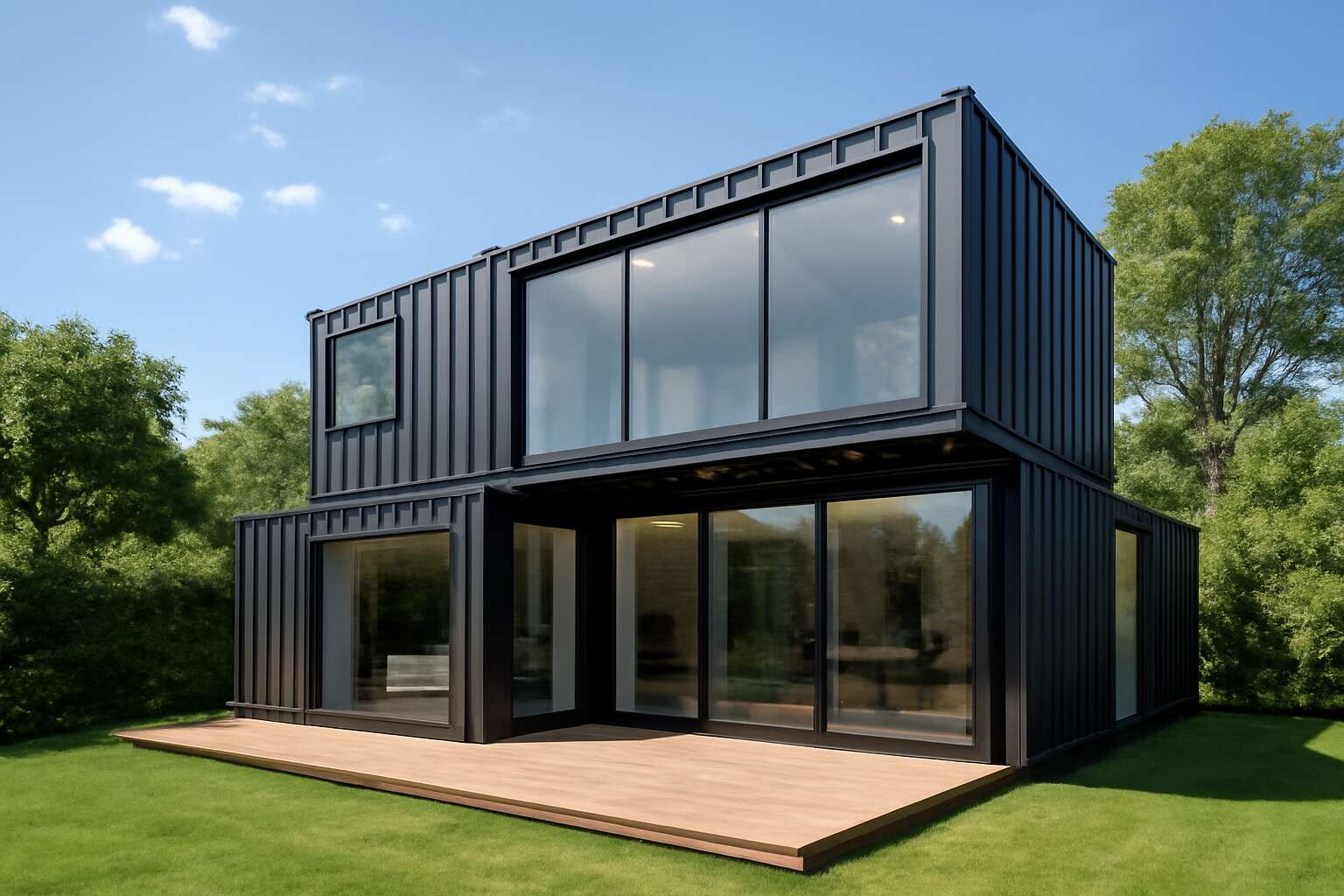
Container homes: converting shipping containers into modern houses
Understanding the concept and benefits
Container homes are not mere steel boxes; they’re chapters waiting to be opened. In South Africa, the push to fuse speed with sustainability has turning shipping yards into design studios. A Cape Town architect once said, ‘Containers are not boxes—they’re frames of possibility.’ This heartbeat drives container homes today: rugged durability meeting adaptable, daylight-welcoming spaces.
Container converted to houses helps unlock a future where spaces stack, align, and breathe with the landscape. The concept hinges on modularity, quick assembly, and lower embodied energy, appealing in both urban cores and rural pockets.
- Speed of construction
- Elemental resilience
- Adaptable expansion
From a South African lens, regulatory clarity and local craftspeople shape how these homes rise within communities. The result is a home that feels anchored, refined, and ready to welcome daylight into unexpected corners. This is why containers converted to houses resonate locally.
Design and architecture strategies
In South Africa, modular living is reshaping neighborhoods—projects report up to a 30% faster shell-to-occupancy timeline when bricks are swapped for containers converted to houses. The result is rugged frames that welcome daylight, air, and a surprising warmth.
Cape Town studios and rural workshops alike are choreographing design around climate and community. Siting, high-performance insulation, and tactile finishes—think timber, plaster, and metal—create interiors that breathe without shouting. These approaches prove that durability can marry daylight and craft!
- Orientation and solar gain
- Insulation, ventilation, and thermal mass
- Modular service cores and expandable layouts
They’re designed to adapt—rooms that can grow with family life and exteriors that nod to the landscape rather than shout at it.
Build process, permits, and regulations
Across South Africa, the build lifecycle for containers converted to houses hinges on local approvals—and that pace can translate into real time saved. Some projects report up to a 30% faster shell-to-occupancy timeline.
Permits drive the schedule. Projects navigate municipal planning, zoning, and safety codes under South Africa’s National Building Regulations (NBR), with SANS 10400 and standards like SANS 10142-1 guiding electrical work.
- Plan submission to the local municipality
- Plan review and structural assessment against NBR/SANS requirements
- Environmental and zoning approvals if needed
- Site inspections and occupancy permit
Costs, financing, and value
“Small footprint, big value,” says a Cape Town developer. The idea of containers converted to houses isn’t just chic—it’s about predictable costs, accessible financing, and lasting value. A lean shell can keep price surprises to a minimum, while thoughtful finishes elevate the street appeal.
Cost drivers include the basics: foundation and site prep; insulation and cladding; and wiring and plumbing.
- Foundation and site works
- Insulation and finishes
- Electrical and plumbing systems
Financing typically mirrors traditional routes—home loans, construction loans, and staged payments—while the value comes from modularity, speed, and lower ongoing energy costs. For South Africans, containers converted to houses offer a predictable, transparent route to ownership.

0 Comments