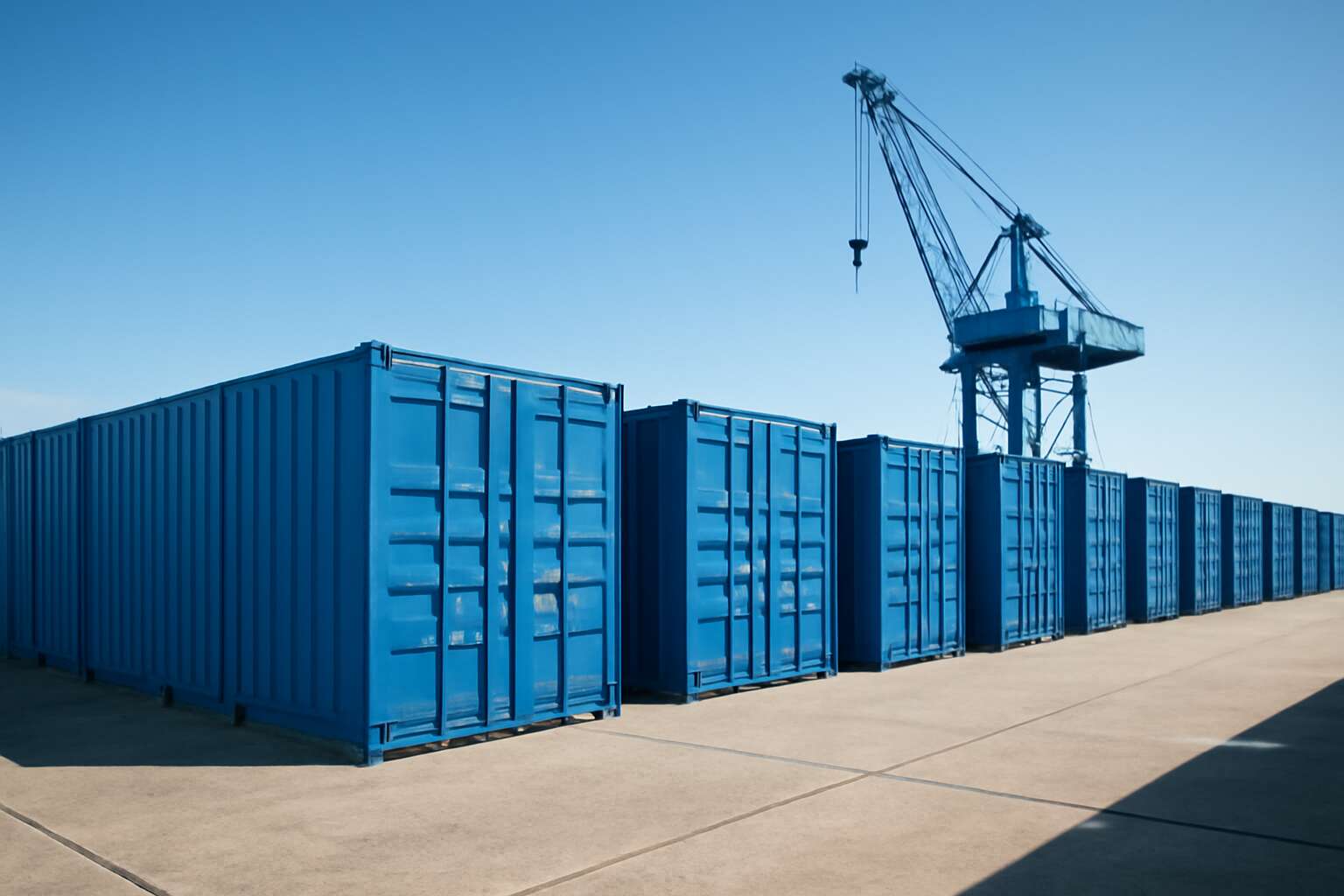
Market Overview and Benefits of Shipping Containers
What is a shipping container and its primary uses
More than 90% of the world’s traded goods ride the waves, a stat that makes ships feel like the highways of the ocean. In South Africa, that same voyage mindset has turned ship containers for sale into a practical asset—compact, sturdy, and surprisingly adaptable for everything from warehousing to mobile workshops.
A shipping container is a standardized steel box, typically 20- or 40-foot long, built to endure sea spray and rough hand-offs. Primary uses include international shipping, on-site storage, portable offices, pop-up shops, and modular building blocks. They ship, stack, and rearrange like Lego for grown-ups.
- Durable steel construction and weather resistance
- Modularity and rapid deployment
- Cost efficiency and reuse across projects
- Security and standardized handling
In a market tuned for practicality, these containers offer value, flexibility, and a surprisingly soft landing for businesses navigating logistics in SA.
Key advantages of owning containers for storage or transport
More than 90% of the world’s traded goods ride the waves, and in South Africa that sea-freight mindset is turning ship containers for sale into practical, space-saving allies for business.
Across Durban, Cape Town and the coast, demand grows for sturdy, quick-to-ship storage, on-site offices, and modular builds. These containers offer ready-made space that can expand or retreat with projects, slashing lead times and carrying costs.
- Rapid deployment and flexible layout
- Enhanced security and weather resilience
- Cost efficiency and lifecycle value
- Standardized handling for smooth logistics
South Africa’s evolving logistics scene benefits from the blend of speed, strength and adaptability, helping businesses respond to demand without overcommitting capital.
Current market demand and price trends for shipping containers
Over 90% of global trade rides the waves, and in South Africa that tidal statistic anchors the market for ship containers for sale. From Durban’s docks to Cape Town’s quays, businesses glimpse a future where storage and workspace arrive as a single, weather-hardened module!
Market demand sits at the crossroads of speed and stability: ready-made space that can be added or withdrawn with a project, slashing lead times and capital exposure.
- Demand drivers: on-site storage, pop-up offices, and modular builds
- Price trends: steel costs and shipping lanes influence new versus used mixes
- Logistics fit: standardized handling reduces downtime and simplifies tendering
In South Africa’s evolving logistics scene, these containers blend speed, strength and adaptability, keeping businesses responsive without overreaching capital.
Common misconceptions about purchasing shipping containers
More than 90% of global trade moves by container ships, and South Africa sits at the crossroads of that vast current. Market overview: Durban and Cape Town are embracing ship containers for sale as ready-made spaces—fast to deploy, simple to scale, and built to endure our changing weather. Demand favors on-site storage, pop-up offices, and modular builds, with price signals nudging buyers toward a balanced mix of new and used stock. Standardized handling keeps downtime low and bidding processes straightforward.
Here are the core benefits in a single, practical frame:
- Rapid deployment and scalable space for evolving projects
- Rugged durability suited to coastal environments
- Predictable capital expenditure with reuse and modular upgrades
Common misconceptions about purchasing ship containers for sale can cloud judgment.
- Myth: they’re only for storage and cannot be adapted
- Myth: insulation, HVAC or solar are prohibitively expensive
- Myth: resale value collapses after use
Types of Shipping Containers and Their Specifications
Dry standard containers and high-cube variants
More than 90% of global trade by volume moves by sea, and South Africa’s shores feel that rhythm every day. Two main contenders shape the market: dry standard containers and their taller high-cube cousins. For buyers exploring ship containers for sale, understanding these shells sets the stage for smart choices.
Dry standard containers arrive in 20- and 40-foot options, with a rugged steel shell and weatherproof doors. High-cube variants rise about a foot higher, unlocking extra interior space without widening the footprint. Both offer solid corners for stacking and dependable transport across South Africa’s busy ports.
Key specs to note include:
- Lengths: 20 ft or 40 ft
- Heights: standard ≈ 8’6″ exterior; high-cube ≈ 9’6″
- Materials: marine-grade steel with corrosion resistance
- Flooring: ply or upgraded timber
- Doors: secure double-leaf with seals
Refrigerated containers for temperature-controlled goods
More than 90% of global trade by volume moves by sea, and South Africa’s shores feel that rhythm daily. Refrigerated containers keep perishables pristine as they voyage from farm to market. Ship containers for sale carry not just metal and cold, but the quiet assurance that freshness will endure the long haul!
Refrigerated containers—reefers—offer precise temperature control, built-in condensers, and insulated walls that hold steady climates from cargo hold to quay. Typical configurations cover 20 ft and 40 ft footprints, with an airy interior that accommodates pallets and controlled humidity.
Key specifications to consider include:
- Sizes: 20 ft or 40 ft
- Temperature range and humidity control
- Power options: shore power or internal genset
- Flooring and load capacity
Open-top and flat-rack containers for special cargo
More than 90% of global trade moves by sea, and South Africa’s ports ride that tidal wave in real time. The real stars are the steel boxes we call ship containers for sale. Open-top and flat-rack variants shine when standard heights won’t contain your cargo, perfect for bulky equipment. They’re the no-nonsense solution for loads that won’t fit through a regular door.
Open-top containers ditch the ceiling for top-loading freedom, while flat-racks offer collapsible end walls for oversized items. Key specs keep things simple:
- Open-top: removable roof for tall cargo
- Common sizes: 20 ft and 40 ft footprints
These options slot neatly into SA operations, whether you’re stocking a warehouse or outfitting a mobile workshop. If you’re scouting ship containers for sale here, you’ll notice the rugged simplicity and practical customization that keeps Durban and Cape Town moving.
Tank containers for liquids and hazardous materials
Tank containers ferry liquids and hazardous materials with quiet, unshowy efficiency. In South Africa’s bustling ports, these ISO tanks move from refinery to end user with minimal fuss. They arrive in standardized 20-foot footprints, holding roughly 20,000 to 26,000 litres, and shield contents with welded steel and durable linings suited to a range of chemicals and food-grade liquids.
Key specs profile a careful balance of safety and practicality: corrosion-resistant interiors, robust valves, and UN certifications that keep cargo compliant on every transit. If you’re browsing ship containers for sale, tank variants illustrate how reliability and flexibility travel as smoothly as the cargo they cradle.
- Internal materials: stainless steel 304/316
- Coatings and linings for compatibility
- Insulation options for temperature control
- UN certification for hazardous liquids
Durban and Cape Town feel the ripple of this choice every day—ship containers for sale become the practical heartbeat of local commerce.
Insulated containers and other specialty options
Across Durban’s docks, a simple truth travels quietly: temperature is the currency of trust in transit. Some studies suggest up to 60% of perishables hinge on insulated containers to keep their temper—and their taste—intact.
Insulated containers rely on robust foam cores and durable linings, shielding contents from Durban heat and sea-salt compromise. Options span single-zone and dual-zone control, weather-tight doors, and seamless access that respects both speed and safety.
- Ventilated units designed for grains, coffee, or tobacco
- Double-door or side-door configurations for rapid, flexible loading
- Reinforced corner posts and forklift pockets for rugged handling
If you’re exploring ship containers for sale, you’ll notice the spectrum extends beyond the usual steel box: insulated forms, configurable zones, and clever access points that keep South Africa’s supply chains moving from the port to pantry.
Buying Guide: Costs, Compliance, and Logistics
New vs used containers: pricing and durability
Across South Africa’s coastline, a single ship containers for sale can spark a corridor of possibilities. The market hums with enduring value and modular magic, and buyers treat each container as a portable citadel—weathering tides with quiet, seaworthy resolve!
Costs hinge on size, condition, and transit. New units command a premium but pristine strength, while used boxes offer savings with refurbishing. Consider these core cost factors to balance as you chart the voyage:
- Upfront price versus long-term depreciation
- Delivery to site and access logistics
- Insurance and import duties where applicable
Compliance and documentation flow like tides: ensure proper permits, safety checks, and local regulations accompany the sale. For durability, weigh the tradeoffs between new versus used containers—the latter can still deliver sturdy storage or transport in the SA climate.
Sizing, capacity, and dimension standards
Across South Africa’s coastline, ship containers for sale become more than storage—they are portable citadels that spark opportunity. A recent survey finds 68% of buyers prize modular adaptability over upfront cost, a testament to how durability and design shape a project’s destiny. They shelter today, and dream tomorrow.
Costs hinge on size, condition, and transit. Upfront price versus long-term depreciation guides the voyage: new units offer pristine strength, while used boxes save cash with refurbishment. For ship containers for sale, weigh delivery to site, access logistics, insurance, and any import duties.
Compliance and documentation ebb and flow like tides—permits and safety checks must accompany the sale. Sizes to know:
- 20-foot standard
- 40-foot standard
- 20-foot high-cube
Delivery, installation, and on-site considerations
Behind every smart warehouse solution in South Africa is a choice between price tags and practicality. Buying ship containers for sale isn’t just a purchase—it’s a project with logistics, insurance, and timing all vying for the spotlight.
Costs hinge on size, condition, and transit, plus delivery to site and site readiness. Consider these drivers:
- Delivery to site and access constraints
- Insurance and risk cover for transit and on-site storage
- Import duties, taxes, and compliance fees
Compliance and documentation ebb and flow—permits, safety checks, and sign-offs must accompany the sale. Expect a straightforward trail of paperwork that aligns with SA standards, and plan for inspections before commissioning.
On-site considerations: foundation, crane or forklift access, weather exposure, and securing containers against wind. Factor in turnover time for installation and the need for temporary power or lighting if the unit will house operations.
Regulatory and safety compliance when purchasing containers
Buying ship containers for sale isn’t a sparkly bolt of cheap metal; it’s a regulatory relay race. In South Africa, the fastest quote can derail on paperwork, duties, and delivery timing. As a seasoned SA logistics director quips, ‘Speed without compliance is just speed to nowhere.’
Regulatory and safety compliance isn’t optional cosplay; it’s the whole show. You’ll navigate permits, inspections, and sign-offs that align with SA standards.
- Import documentation and SA customs clearance
- Transit risk coverage and on-site storage protections
- Taxes, duties, and regulatory fees timetable
Logistics to consider go beyond the crate. Delivery scheduling, insurance during transit, and site readiness all influence final costs and project timing.
That’s why partnering with experienced logistics teams for this kind of project can turn a potential bottleneck into a smooth handover.
Where to Find Reputable Suppliers and Deals
Direct manufacturers vs dealers and brokers
South Africa’s logistics heartbeat grew resilient in 2024, with demand for ship containers for sale rising about 12% as businesses sought modular space and flexible throughput. The path to reliable sourcing begins with suppliers who publish transparent pricing, verifiable warranties, and clear delivery terms. Local trade networks often reveal partners who stand by their commitments.
- Direct manufacturers with transparent pricing and factory warranties for ship containers for sale
- Established local dealers with service networks and ready regional delivery
- Reputable brokers who verify container condition and ownership details
- Clear terms on transport, installation, and after-sales support
Direct manufacturers typically offer lower total cost by trimming middlemen, while SA dealers and brokers accelerate delivery through regional hubs and ready stock. The choice hinges on balance—price versus speed, warranties versus convenience, and a proven track record versus local proximity.
Online marketplaces and auctions
In SA, modular space is booming: ship containers for sale demand climbed 12% last year as businesses embraced flexible space. A smart buyer navigates reputable sources that publish transparent pricing and verifiable warranties.
Where to look? Online marketplaces and auctions that verify seller history can offer both transparency and speed.
- South Africa–based marketplaces like Gumtree SA and OLX South Africa, known for seller histories and price transparency
- Registered container auctions and liquidation platforms that verify container condition and ownership
- Industry-forward directories and freight networks that pre-vet suppliers and publish delivery terms
Evaluating warranties, support, and after-sales service
In SA, demand for ship containers for sale rose 12% last year. The successful buyers vet sources, warranties, and after-sales support, where transparent pricing keeps risks visible.
Where to look for reputable suppliers in this market? South Africa-based marketplaces like Gumtree SA and OLX SA offer seller histories and price transparency. Registered container auctions verify condition; freight directories pre-vet suppliers and terms.
- Gumtree SA and OLX SA for transparent seller histories
- Registered auctions and liquidation platforms that verify condition
Evaluating warranties and after-sales service means seeking specifics: duration, coverage, maintenance, and clear escalation paths. Confirm contact options and response times.
With the right checks, the process of acquiring ship containers for sale becomes more predictable, aligning price transparency with real confidence.



0 Comments